Land use and socio-economic changes caused by riverbank erosion - case study: Obrenovac municipality, Serbia
Bočna strana članka
Glavni sadržaj članka
Apstrakt
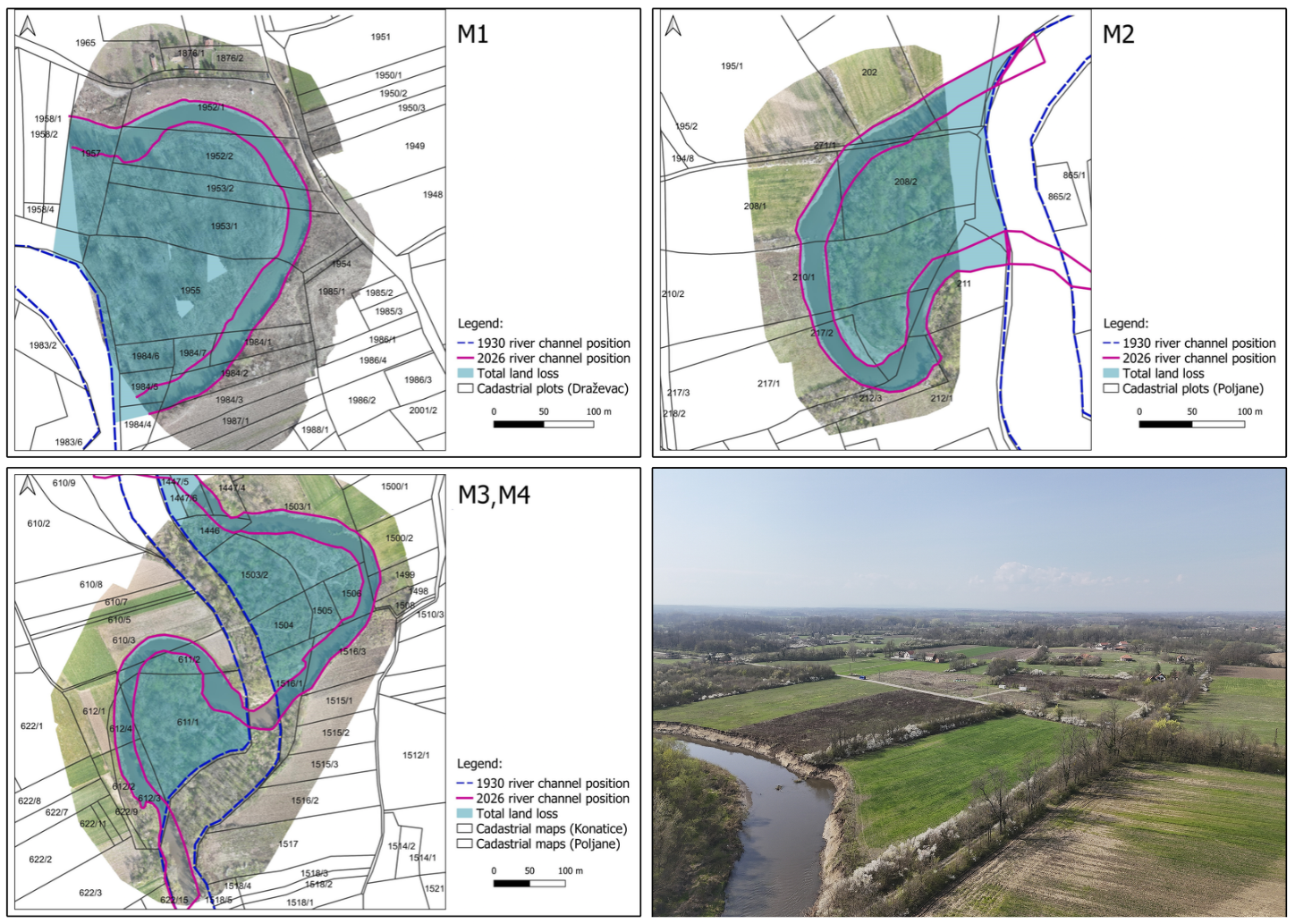
Lateral bank erosion of meandering rivers represents a significant geomorphological process in the lower part of the Kolubara River Basin in Serbia. This process directly impacts land-use and agricultural productivity and lead to broader environmental, socioeconomic, and demographic changes. Historically, the Kolubara riverbanks have been intensively used for agriculture. Today, lateral channel migration and riverbank erosion, driven by the interaction between natural process and human activities, directly threaten traditionally active land plots along the river. This study investigates the long-term dynamics of riverbank erosion along the four active meanders of the Kolubara River in Obrenovac Municipality over a 97-year period (1930–2026). Main tasks include quantification of lateral channel migration and land loss rates, analysis of land-use changes within the endangered plots, and an investigation of socioeconomic consequences and demographic dynamics in affected settlements. The methodological framework integrates cadastral maps analysis, remote sensing techniques (UAVs), and GIS software, with analysis of demographic and land-use data. The results indicate that maximum lateral channel migration reached 259.3 m during the observed period, while the total land loss amounted to 17.6 ha, consisting mostly of arable land. This reduction has directly affected the local agricultural sector, resulting in an estimated land loss value of approximately 24,122 USD. Demographic analysis reveals population decline exceeding 40% in the analysed settlements (Draževac, Konatice and Poljane) between 1961 and 2022, from over 90% of the economically active population in 1961 to less than 2% in 2022. Ultimately, by highlighting the socioeconomic impacts of riverbank erosion such as irreversible agricultural land loss and rural livelihood disruption, these findings offer valuable insights for spatial planning and sustainable land management.
Puni tekst članka je dostupan za ovaj lokalitet: English.
Detalji članka
Centar za demografska istraživanja Instituta društvenih nauka