
An empirical study of the glass ceiling’s impact on gender equality and career opportunities in the food and beverage sector
Article Sidebar
Main Article Content
Abstract
Women’s professional trajectories are often obstructed by the glass ceiling, an invisible barrier that limits their access to higher managerial positions within organizations. This research aimed to examine and analyse the glass ceiling effect among women employed in the food and beverage sector of the hospitality industry. An empirical study was conducted using a questionnaire distributed in food and beverage facilities across Serbia, Montenegro, Croatia, and Bosnia and Herzegovina. The data collection lasted from October 2023 to January 2024 and encompassed 1,082 respondents. The data analysis was performed using Microsoft® Excel® 2019 and Statistical Software for Social Sciences, version 21.0. The Mann-Whitney U-test, Kruskal-Wallis H-test, and Tukey HSD test were employed to examine the research hypotheses. The study’s findings reveal the existence of the glass ceiling effect within the hospitality industry, although to a small extent. Interestingly, the results of the statistical tests suggest that manifestations of the glass ceiling do not significantly vary based on respondent characteristics such as gender, age, education, marital status, parental status, country of employment, or length of work experience.
1 INTRODUCTION
Gender equality has been positioned as a significant topic and focus of attention among academics, practitioners, policymakers, governments, non-governmental organizations, and the entire society (Eweje and Nagano 2021). It has become an important aspect of a healthy society and sustainable growth (Tokal et al. 2023). In general, equality is the right of different groups of people to have a similar social position and receive the same treatment, while gender equality represents the act of treating women and men equally (Cambridge Dictionary n.d.). The European Union defines gender equality as equal visibility, empowerment, involvement, and opportunities for both men and women in society (Council of Europe 1998). In economy, gender equality refers to the equal opportunity and integration of men and women into the labour market (Abendroth 2014). According to the International Labour Office (2007), gender equality refers to men and women having equal rights, opportunities, and treatment in terms of wages and career prospects. This does not mean that there must be an equal proportion of men and women in every profession, but rather that both genders should benefit equally from the same opportunities (Iqbal et al. 2022).
Gender equality has become a global concern recognized as one of the important components in Agenda 2030 and its 17 Sustainable Development Goals (SDG) (United Nations 2015). The fifth SDG aims to achieve gender equality and empower all women and girls, ensuring their active participation in leadership and decision-making, and empowering women through information and communication technologies, while the eighth SDG focuses on full and productive employment and decent work with equal pay for all people (United Nations 2018). Women’s involvement in all aspects of life and work is crucial for sustainable development (Agenda 21 1992;UN General Assembly 1992). However, women hold only 37% of the leadership positions worldwide (World Economic Forum 2022), and they continue to be heavily represented in low-status and low-paid positions (UN Women 2022). The global Gender Gap Index 2022 estimated that it would take 132 years to close the gender gap and 151 years to attain equal economic participation and opportunities (World Economic Forum 2022). According to research, the glass ceiling effect is one of the factors that have a detrimental impact on women’s career opportunities. Despite the increased theoretical interest in gender equality and the glass ceiling, there has been little empirical research on this phenomenon (Babic and Hansez 2021), particularly in the hospitality industry and its food and beverage segment. In general, tourism and hospitality industries are regarded as largely traditional, patriarchal, and male-dominated. Existing studies on women’s positions in the hospitality industry found that women are perceived adversely or even as being aggressive if they demonstrated a desire for career advancement, and that there was no comprehension of why women wished to progress to higher positions (Segovia-Pérez et al. 2019). Furthermore, while women accounted for 55.5% of the hospitality workforce in 2017, they remained underrepresented in managerial positions (Ozdemir 2021).
The purpose of this paper is to examine and analyse the glass ceiling effect among the women employed in the food and beverage sector of the hospitality industry. The food and beverage sector plays a vital role in global tourism and economic development (EHL Insights 2024). It encompasses restaurants (hotel restaurants, exclusive restaurants, classic bar-restaurants, pizzerias, restaurants serving Chinese or Mexican food), cafeterias, coffee bars, bistros, beach bars. The food and beverage sector offers diverse employment opportunities and significantly shapes a nation’s cultural authenticity (Getz and Page 2016).
The significance of this research stems from the fact that women account for approximately half of the worldwide population (World Bank 2023), and gender equality is becoming a significant component in plans for economic growth and development (Ribes Moreno 2023;Tokal et al. 2023). Eliminating the glass ceiling effect is important, since a lack of professional advancement opportunities is associated with the loss of talent, employee turnover, job dissatisfaction, and a lack of commitment and loyalty (Remington and Kitterlin-Lynch 2017). Furthermore, previous research indicates that having women on management teams improves a company’s financial success (Martínez-Fierro and Lechuga Sancho 2021).
The paper is structured as follows. The theoretical part of the paper focuses on the glass ceiling phenomenon and the need for equal career opportunities for both men and women, with a special emphasis on the food and beverage sector of the hospitality industry. The empirical part of the paper includes research methodology and a description of the research approach such as research hypotheses, questionnaire structure, pilot research, the procedure of the conducted research and applied statistical tests. After the methodology and the research results are presented, what follows is a discussion of the research findings. The paper concludes with major findings, implications for academicians and practitioners, limitations of the conducted research, and recommendations for further studies on this topic.
2 THE GLASS CEILING PHENOMENON: THE KEY ANTECEDENTS AND NEGATIVE EFFECTS
The metaphor of a glass ceiling was initially used to describe women’s limited advancement opportunities in the organizational hierarchy (Hymowitz and Schellhardt 1986). Nowadays, this metaphor is commonly used in business and management literature (Martínez-Fierro and Lechuga Sancho 2021). More broadly, the metaphor of glass ceiling can refer to members of certain population groups, such as racial/ethnic minorities, people with diverse sexual preferences, and women (Stavrinoudis et al. 2021), however it is used in this research specifically in regard to women. According to definitions, glass ceiling represents persistent barriers, discriminatory practices, and attitudes that prevent qualified women from advancing to higher management positions (Powell and Butterfield 2015;Babic and Hansez 2021), or a lower probability of women being promoted than men, or simply a lower proportion of women in top management positions (Espinosa and Ferreira 2022). The glass ceiling represents discrimination against women in management, and this phenomenon increases as women advance in their professional careers within the organization (Babic and Hansez 2021;Cotter et al. 2001). Unfortunately, some studies have discovered that many companies proclaim gender equality and equal career opportunities, although in essence they fail to fulfil them (Benschop and Doorewaard 1998). There are four distinctive characteristics of the glass ceiling effect: (1) gender difference is not explained by job-relevant characteristics of the employee, (2) gender difference is greater at higher levels of an outcome compared with lower levels, (3) gender inequality exists in the chances of advancement into higher levels, not just the proportions of both genders at higher levels, and (4) gender inequality increases over the course of a career (Cotter et al. 2001).
Although women occupy more leadership positions today than in the past (Taparia and Lenka 2022), they continue to fall behind men in executive positions (Timmer and Woo 2023). There are several antecedents of the glass ceiling, which can be observed from four different groups of factors: societal and cultural (gender role stereotypes, lower status of women in society), individual (lack of education, lack of self-confidence, self-efficacy and self-promotion, lack of managerial aspirations, work-family conflict), organizational (hostile and benevolent sexism, discriminatory human resource practices, lack of mentors and role models), and policy-related (Taparia and Lenka 2022). The glass ceiling effect can have a wide range of negative consequences, both at the individual and organizational levels. Job dissatisfaction, disengagement, burnout, professional stress, and low productivity are some of the major consequences of the glass ceiling on the individual level. At the organizational level, the consequences include employer’s reduced desirability, employer’s poor brand, lower overall results, and high turnover rates (Taparia and Lenka 2022). The glass ceiling is not merely a barrier to individual career advancement; it also poses significant challenges to broader societal progress. By perpetuating systemic discrimination, this phenomenon actively impedes the realization of a more equitable society. Furthermore, the glass ceiling prevents organizations and economies from fully leveraging the talents and potential contributions of a significant portion of the workforce, thereby hindering innovation and economic growth (World Economic Forum 2020).
3 GLASS CEILING PHENOMENON IN THE HOSPITALITY INDUSTRY: HYPOTHESES DEVELOPMENT
Gender has historically played a crucial role in hospitality employment. However, women’s access to managerial roles in hospitality has recently been identified as an important topic in literature (Albors-Garrigos et al. 2021), and the glass ceiling effect has been found to exist in the hospitality industry (Costa et al. 2017;Segovia-Pérez et al. 2019;Fathy and Zidan 2020;Liu et al. 2020). While women constitute a significant proportion of the tourism and hospitality workforce worldwide (approximately 56%, according to Stacey (2015)), their representation in higher-ranking positions remains disproportionately low compared to their male counterparts (Mooney 2020;Stavrinoudis et al. 2021). This disparity is evident, with women holding less than 40% of managerial positions, less than 20% of general management roles, and a mere 5–8% of board positions in the hospitality industry (Ristova and Angelkova Petkova 2019). Furthermore, other research results indicate that women in this industry are often concentrated in roles characterized by lower wages and a lack of specialized skills (Türkcan 2022). Many women experience a “broken rung” as one of the glass ceiling effects, which manifests as missing the first step in the “ladder of leadership,” such as the early stages of the promotion process (Smith 2015). Consequently, the underrepresentation of women in junior managerial roles creates a bottleneck effect, limiting the pool of qualified female candidates eligible for advancement to higher-level positions (Russen et al. 2021). Additionally, women in the hospitality industry often encounter the “old boys’ network,” an informal and exclusionary system of male colleagues who preferentially support and promote each other’s career advancement. This phenomenon further impedes women’s access to senior management positions, thus reinforcing the glass ceiling effect (Gebbels 2022). Therefore, the first hypothesis proposed in this research is:
Hypothesis 1: The glass ceiling effect exists in the food and beverage sector of the hospitality industry.
The literature highlights several factors contributing to women’s struggle to advance to higher positions within the hospitality industry. Societal barriers, rooted in conscious and unconscious biases related to gender, play a significant role. These biases perpetuate the stereotypes about women’s abilities and societal expectations regarding their roles in both professional and family spheres. Traditional gender roles often disproportionately burden women with childcare and household responsibilities, creating challenges in balancing career aspirations with family commitments. The demanding nature of the hospitality industry can exacerbate this conflict, forcing women to make difficult choices that may hinder their career progression (Clevenger and Singh 2013). Research by Boone et al. (2013) reveals that while both male and female executives predominantly rely on in-home childcare, women are more likely to utilize additional childcare options like school/daycare and extended family. This suggests that women may face greater challenges in arranging and managing childcare, potentially impacting their career advancement opportunities, particularly during critical periods when promotions are most likely to occur. Furthermore, household responsibilities can limit women’s ability to network and build professional relationships. While men may have more freedom to engage in after-work networking activities, women often prioritize family obligations, thus missing out on valuable opportunities to connect with colleagues and superiors (Segovia-Pérez et al. 2019). Therefore, the second hypothesis proposed in this research is:
Hypothesis 2: Manifestations of the glass ceiling effect differ, depending on the respondent’s personal factors such as gender, age, marital status, and parental status.
Previous research on this topic indicates a complex relationship between educational level and the perception of barriers to career advancement among women in the hospitality industry. While educational level appears to influence women’s perceptions of these barriers (Bazazo et al. 2017), it does not necessarily guarantee increased promotions for women. The hospitality industry presents unique nuances and challenges that may be best understood through direct experience rather than solely through formal education. Soft skills, such as communication, interpersonal relationships, emotional intelligence, and problem-solving, are highly valued in this sector and are often cultivated through on-the-job training (Baum 2006). Hands-on experience in diverse roles within the industry can foster a deeper understanding of operations, customer service, and leadership, potentially outweighing theoretical knowledge gained in academic settings (Deery and Jago 2015). Additionally, the industry’s high turnover rates create opportunities for rapid career progression, as organizations constantly seek new talent and leadership to maintain operational efficiency (Enz and Siguaw 2000). Therefore, while educational attainment may play a role in shaping women’s perceptions of career barriers, it is not the sole determinant of the advancement in the hospitality industry. Practical experience, adaptability, and the ability to navigate the industry’s unique challenges are also critical factors to consider. Furthermore, the hospitality industry’s dynamic nature, characterized by evolving customer preferences, emerging technologies, global trends, and unforeseen disruptions like the COVID-19 pandemic, often favours individuals who are adaptable, quick learners, and thrive in fast-paced environments. Such individuals may experience rapid career advancement regardless of their educational background or the length of work experience. Nevertheless, studies such as Zhong et al. (2013) emphasize the importance of both work experience and formal education in facilitating women’s career advancement within the hospitality industry. Therefore, the third hypothesis proposed in this research is:
Hypothesis 3: Manifestations of the glass ceiling effect differ depending on the respondent’s education level and the length of work experience.
4 RESEARCH METHODOLOGY
An empirical study was conducted using a specially designed questionnaire. The questionnaire began with profile questions to determine the respondents’ key characteristics: gender, education, marital status, and parental status. Including both genders allows for a more comprehensive understanding of the glass ceiling phenomenon and its manifestations. This approach can uncover potential gender-specific challenges or biases that may not be apparent when encompassing only one gender. The following set of questions concerned the respondents’ country of employment, type of food and beverage facility where they work, job position, length of work experience in food and beverage facilities, and the length of work in the current food and beverage facility. In addition to the profile questions mentioned above, the questionnaire included statements formed in the measurement scale “Glass Ceiling Effect” to which respondents answered using a seven-point Likert scale (1 – completely disagree, 7 – completely agree). This research applied a measurement scale developed from the three initial statements designed to examine manifestations of the glass ceiling effect among women in managerial positions. Notably, these statements have been adjusted in this research with the aim to encompass all women employees within the food and beverage sector, not solely those in managerial positions (Elacqua et al. 2009: 288): (e.g. women at our company “generally progress to a certain level, then go no further”, “I believe our company is not serious about eliminating barriers that prevent women from reaching their potential”, and women at our company “are often excluded from important senior management communications”). Apart from the above mentioned statements, the measurement scale included three additional statements more suitable to European culture, developed on the basis of the research of Babic and Hansez (2021) (e.g. I notice that men progress more quickly than women in this company; women are not given the same treatment as men in managerial positions at this company; and men are able to get jobs at higher hierarchical levels in this company than women, even with the same expertise and skills) with the aim of more thoroughly investigating manifestations of the glass ceiling effect. The pilot research included 30 respondents from the food and beverage sector of the hospitality industry, with the aim to ensure the comprehensibility of the questions and their unambiguity and clarity, as well as the reliability of the measurement scale. Cronbach’s Alpha coefficient for the measurement scale “Glass Ceiling Effect” in this pilot research was above 0.7, indicating a high reliability.
The final questionnaire was distributed online, and all the responses were anonymous. The response collection period lasted from October 2023 to January 2024. This study used a non-probabilistic sampling approach which is well-suited for exploratory quantitative research. Convenience sampling included distributing the survey on LinkedIn profiles in order to reach readily available participants, whereas purposive sampling involved emailing the survey to possible respondents who met certain research criteria (Fajgelj 2020). The questionnaire was sent to the e-mail addresses of hospitality managers of establishments such as hotel restaurants, exclusive restaurants, classic bar-restaurants, pizzerias, restaurants serving Chinese or Mexican food, cafeterias, coffee bars, bistros, and beach bars with a polite request to take 15 minutes to complete the questionnaire and forward it to other employees. The research was conducted in four countries (Serbia, Montenegro, Croatia, and Bosnia and Herzegovina) which share similarities in terms of their socialist past, post-socialist transitions, socio-economic challenges, and cultural norms. These shared characteristics help explain why similar results might persist across these countries, despite their individual variations and specific circumstances.
The questionnaire was distributed to about 2,000 employees, and after three kind follow-up e-mails, a total of 1,082 respondents filled out the questionnaire, indicating a response rate of 54.10%, which has been considered acceptable in social sciences (acceptable response rate ranges from 30 to 70%) (De Vaus 2013).
The processing and analysis of the collected data were performed using Microsoft® Excel® 2019 and Statistical Software for Social Sciences, SPSS, version 21.0. Cronbach’s Alpha coefficient for the measurement scale “Glass Ceiling Effect” was 0.948, indicating high reliability for the scale (Taber 2018). The normality of the data distribution was examined using the Kolmogorov-Smirnov test, along with histograms, skewness, kurtosis, the normal probability curve, and the boxplot. The results for the scale “Glass Ceiling Effect”, with a significance (Sig.) of 0.000, indicated that the assumption of normal data distribution was not met. As a result, non-parametric statistical techniques were used for statistical analysis within the measurement scales. The Mann-Whitney U-test was used to compare differences between two groups, while the Kruskal-Wallis H-test and Tukey HSD test were used to compare differences among three or more groups with a 95% confidence interval. Levene’s test for equality of variances was applied in all tests comparing differences between groups, meeting the assumption of variance homogeneity in all the cases (p > 0.05).
5 RESEARCH RESULTS
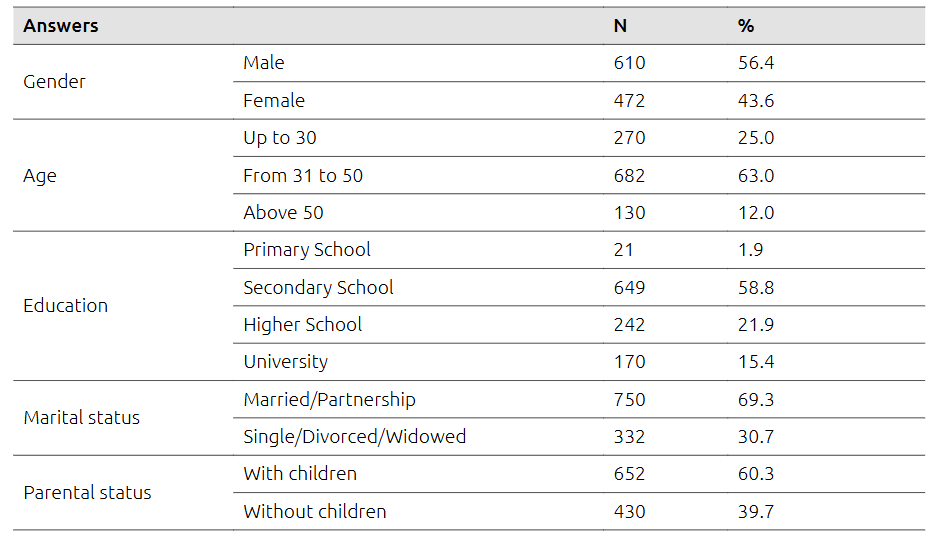
Table 1 presents basic information about the respondents. The study encompassed 1,082 respondents, with 56.4% men and 43.6% women. Regarding age distribution, the majority of respondents (63%) were between the ages of 31 and 50, followed by those aged up to 30 (25%). Regarding education, the majority of respondents completed secondary school (58.8%). More than one-fifth of respondents had a higher school diploma, while 15.4% had completed university. Such educational structure is not surprising, given the fact that the food and beverage sector of the hospitality industry often has a significant proportion of employees with secondary education. The emphasis on respondents with secondary education allows for a focused examination of the glass ceiling’s impact on the early-career trajectories within the hospitality industry and the glass ceiling phenomenon. Almost 70% of the respondents were married or in a partnership, while 60% had children.
| Answers | N | % | |
|---|---|---|---|
| Gender | Male | 610 | 56.4 |
| Female | 472 | 43.6 | |
| Age | Up to 30 | 270 | 25.0 |
| From 31 to 50 | 682 | 63.0 | |
| Above 50 | 130 | 12.0 | |
| Education | Primary School | 21 | 1.9 |
| Secondary School | 649 | 58.8 | |
| Higher School | 242 | 21.9 | |
| University | 170 | 15.4 | |
| Marital status | Married/Partnership | 750 | 69.3 |
| Single/Divorced/Widowed | 332 | 30.7 | |
| Parental status | With children | 652 | 60.3 |
| Without children | 430 | 39.7 | |
| Source: Authors | |||
Table 2 presents the basic information about the respondents’ employment. The majority of respondents worked in Croatia (45.6%), followed by Serbia (25%). A certain proportion of respondents worked in Montenegro (15.2%) and Bosnia and Herzegovina (14.3%). The majority of respondents worked in hotel restaurants (38.1%), followed by exclusive restaurants (20.2%). A smaller number of respondents worked in classic bar-restaurants (15.7%), pizzerias, restaurants serving Chinese or Mexican food (13.3%), and cafeterias, coffee bars, bistros, beach bars (12.7%). In terms of working experience in the current food and beverage facility, the majority of respondents have worked there for 1 to 5 years (40.5%), followed by those who have worked in their current facility for less than 1 year (28.1%). There were 18.6% of respondents who have worked in the present food and beverage facility from 5 to 10 years, and 12.8% of respondents who have worked for more than 10 years. The inclusion of respondents who worked less than 1 year and from 1 to 5 years is important as the early years of a career are formative in shaping individuals’ perceptions of fairness, equity, and opportunity within the organization. Analysing the experiences of employees with varying tenure can reveal whether manifestations of the glass ceiling effect differ based on the length of the time spent in the food and beverage facility. This can help identifying potential systemic biases or discriminatory practices that may emerge over time.
| Answers | N | % | |
|---|---|---|---|
| Country | Croatia | 493 | 45.6 |
| Serbia | 270 | 24.9 | |
| Montenegro | 164 | 15.2 | |
| Bosnia and Herzegovina | 155 | 14.3 | |
| Type of food and beverage facility | Hotel restaurant | 412 | 38.1 |
| Exclusive restaurant | 219 | 20.2 | |
| Classic bar-restaurant | 170 | 15.7 | |
| Pizzeria, restaurant serving Chinese or Mexican food | 143 | 13.3 | |
| Cafeteria, caffe bar, bistro, beach bar | 138 | 12.7 | |
| Length of working experience in present food and beverage facility | Less than 1 year | 304 | 28.1 |
| From 1 to 5 years | 438 | 40.5 | |
| From 5 to 10 years | 202 | 18.6 | |
| From 10 to 15 years | 69 | 6.4 | |
| More than 15 years | 69 | 6.4 | |
| Source: Authors | |||
Table 3 presents the results for the number and percentage of women and men in various job positions in food and beverage facilities. Men are more likely to have higher-level job positions such as Director, Food and Beverage Manager, Bar Manager, Restaurant Manager, and Executive Chef, whereas women are more likely to hold lower-level jobs such as Restaurant Support Staff and Kitchen Support Staff. The results imply that gender balance varies by job type, with notable disparities in gender in leadership and managing positions.
| Position | Women | Men | Total | |||
|---|---|---|---|---|---|---|
| N | % | N | % | N | % | |
| Director | 26 | 5.53 | 52 | 8.85 | 78 | 7.21 |
| Food and Beverage Manager | 18 | 3.83 | 52 | 8.85 | 70 | 6.47 |
| Bar manager | 9 | 1.91 | 37 | 6.30 | 46 | 4.25 |
| Restaurant manager | 43 | 9.15 | 64 | 10.89 | 107 | 9.89 |
| Executive Chef | 38 | 8.09 | 70 | 11.91 | 108 | 9.98 |
| Chef | 82 | 17.45 | 98 | 16.67 | 180 | 16.64 |
| Pastry chef | 31 | 6.60 | 12 | 2.04 | 43 | 3.97 |
| Bartender | 36 | 7.66 | 28 | 4.76 | 64 | 5.91 |
| Waiter | 81 | 17.23 | 130 | 22.14 | 211 | 19.50 |
| Sommelier | 42 | 8.94 | 40 | 6.80 | 82 | 7.58 |
| Restaurant support staff | 34 | 7.23 | 15 | 2.55 | 49 | 4.53 |
| Kitchen support staff | 32 | 6.81 | 12 | 2.04 | 44 | 4.07 |
| Total | 472 | 100.00 | 610 | 100.00 | 1082 | 100.00 |
| Source: Authors | ||||||
Table 4 presents the structure of women and men regarding their employment in various food and beverage facilities in the observed countries. In Croatia, women outnumbered men only in hotel restaurants and in pizzerias, Chinese/Mexican restaurants. In Montenegro, women outnumbered men in pizzerias, Chinese/Mexican restaurants and in cafeterias, coffee bars and bistros, while in Serbia, women outnumbered men in hotel restaurants, exclusive restaurants and in cafeterias, coffee bars, and bistros. In Bosnia and Herzegovina men outnumbered women only in hotel restaurants.
| Croatia | Montenegro | Serbia | Bosnia and Herzegovina | |||||
|---|---|---|---|---|---|---|---|---|
| N | % | N | % | N | % | N | % | |
| Women | ||||||||
| Hotel restaurant | 91 | 51.70 | 25 | 25.77 | 39 | 33.62 | 14 | 16.87 |
| Exclusive restaurant | 32 | 18.18 | 20 | 20.62 | 25 | 21.55 | 12 | 14.46 |
| Classic restaurant-bar | 19 | 10.79 | 12 | 12.37 | 17 | 14.66 | 14 | 16.87 |
| Pizzeria, Chinese/Mexican restaurant | 12 | 6.82 | 28 | 28.87 | 17 | 14.66 | 27 | 32.53 |
| Cafeteria, coffee bar, bistro | 22 | 12.50 | 12 | 12.37 | 18 | 15.52 | 16 | 19.28 |
| Total | 176 | 100.00 | 97 | 100.00 | 116 | 100.00 | 83 | 100.00 |
| Men | ||||||||
| Hotel restaurant | 144 | 45.43 | 27 | 40.30 | 51 | 33.12 | 21 | 29.17 |
| Exclusive restaurant | 67 | 21.11 | 16 | 23.88 | 31 | 20.13 | 16 | 2.22 |
| Classic restaurant-bar | 50 | 15.77 | 14 | 20.90 | 36 | 23.38 | 8 | 11.11 |
| Pizzeria, Chinese/Mexican restaurant | 11 | 3.47 | 6 | 8.96 | 26 | 16.88 | 16 | 22.22 |
| Cafeteria, coffee bar, bistro | 45 | 14.18 | 4 | 5.97 | 10 | 6.49 | 11 | 15.28 |
| Total | 317 | 100.00 | 67 | 100.00 | 154 | 100.00 | 72 | 100.00 |
| Source: Authors | ||||||||
Table 5 presents statistical results (number, percentage, mean (M), standard deviation (SD)) for statements on the scale “Glass Ceiling Effect”. The answers from the seven-point Likert scale were summarized into three groups for easier understanding and discussion: disagree (answers 1, 2 and 3), neutral (answer 4), and agree (answers 5, 6 and 7). The mean value for each statement ranges between 2.10 and 2.30, indicating that the glass ceiling effect is perceived to not exist in the food and beverage sector of the hospitality industry. In addition to the mean values, the frequency and percentage of the respondents’ answers clearly demonstrate that the majority of respondents stated that glass ceiling effect did not exist in food and beverage facilities in which they were employed. Of all respondents, 77.91% disagree with the statement that women generally progress to a certain level and then go no further, while 78.65% respondents disagree with the statement that their employers are not serious about eliminating barriers that prevent women reaching their potential. More than 80% of the respondents disagree with the statement that women are often excluded from important senior management communications. Furthermore, around 80% of the respondents disagree with the statements that men progress more quickly than women, that women are not given the same treatment as men in managerial positions, and that men are able to get jobs at higher hierarchical levels than women, even with the same expertise and skills. A certain number of respondents showed a neutral attitude regarding the statements, ranging from 4.62% to 5.45%.
| Statements | Answers | N | % | M | SD |
|---|---|---|---|---|---|
| Women at our company generally progress to a certain level, then go no further. | Disagree | 843 | 77.91 | 2.30 | 1.978 |
| Neutral | 53 | 4.90 | |||
| Agree | 186 | 17.19 | |||
| I believe our company is not serious about eliminating barriers that prevent women from reaching their potential. | Disagree | 851 | 78.65 | 2.26 | 1.935 |
| Neutral | 56 | 5.18 | |||
| Agree | 175 | 16.17 | |||
| Women at our company are often excluded from important senior management communications. | Disagree | 880 | 81.33 | 2.10 | 1.865 |
| Neutral | 47 | 4.34 | |||
| Agree | 155 | 14.33 | |||
| I notice that men progress more quickly than women in this company. | Disagree | 862 | 79.67 | 2.24 | 1.953 |
| Neutral | 50 | 4.62 | |||
| Agree | 170 | 15.71 | |||
| Women are not given the same treatment as men in managerial positions at this company. | Disagree | 866 | 80.04 | 2.16 | 1.913 |
| Neutral | 59 | 5.45 | |||
| Agree | 157 | 14.51 | |||
| Men are able to get jobs at higher hierarchical levels in this company than women, even with the same expertise and skills. | Disagree | 857 | 79.21 | 2.22 | 1.937 |
| Neutral | 54 | 4.99 | |||
| Agree | 171 | 15.80 | |||
| Source: Authors | |||||
Table 6 presents the results of the Mann-Whitney U-test. The Mann-Whitney U-test did not show a statistically significant difference in the existence of the glass ceiling effect in the answers of men (Md=1.17, N=610) and women (Md=1.33, N=472), U=139179.5, Z=-0.992, p=0.321.
| Answers | N | M | Md | U | z | p | |
|---|---|---|---|---|---|---|---|
| Gender | Male | 610 | 533.66 | 1.17 | 139179.5 | -0.992 | 0.321 |
| Female | 472 | 551.63 | 1.33 | ||||
| Marital status | Married/Partnership | 750 | 537.32 | 1.17 | 121364.5 | -0.699 | 0.484 |
| Single/Divorced/Widowed | 332 | 550.94 | 1.25 | ||||
| Parental status | With children | 652 | 535.64 | 1.17 | 136358.5 | -0.803 | 0.422 |
| Without children | 430 | 550.39 | 1.33 | ||||
| Source: Authors | |||||||
In addition, the Mann-Whitney U-test did not show a statistically significant difference in the existence of the glass ceiling effect in the answers of the respondents who were married/in partnership (Md=1.17, N=750) and single/divorced/widowed (Md=1.25, N=332), U=121364.5, Z=-0.699, p=0.484.
Likewise, the Mann-Whitney U-test did not show a statistically significant difference in the existence of the glass ceiling effect among the respondents with children (Md=1.17, N=652) and those without children (Md=1.33, N=430), U=136358.5, Z=-0.803, p=0.422.
Further examination focused only on women. Results are presented in Table 7. The Mann-Whitney U-test did not show a statistically significant difference in the existence of the glass ceiling effect in the answers of women with children (Md=1.25, N=196) and those without children (Md=1.33, N=276), U=26144.0, Z=-0.655, p=0.513. In addition, the Mann-Whitney U-test did not show a statistically significant difference in the existence of the glass ceiling effect in the answers of women who were married/in partnership (Md=1.67, N=305) and those who were single/divorced/widowed (Md=1.00, N=167), U=24720.5, Z=-0.558, p=0.577.
| Answers | N | M | Md | U | z | p | |
|---|---|---|---|---|---|---|---|
| Women | With children | 196 | 241.11 | 1.25 | 26144.0 | -0.655 | 0.513 |
| Without children | 276 | 233.22 | 1.33 | ||||
| Women | Married/Partnership | 305 | 238.95 | 1.67 | 24720.5 | -0.558 | 0.577 |
| Single/Divorced/Widowed | 167 | 232.03 | 1.00 | ||||
| Source: Authors | |||||||
Table 8 presents the results of the Kruskal-Wallis H-test. The Kruskal-Wallis H-test did not identify statistically significant differences regarding the age of the respondents χ2(df=2, N=1082) =2.347, p=0.309 and the length of the working experience in the current food and beverage facility χ2(df=4, N=1082) =7.625, p=0.106.
| Answers | N | M | Md | χ² | df | p | |
|---|---|---|---|---|---|---|---|
| Age | 18–30 | 270 | 564.38 | 1.50 | 2.347 | 2 | 0.309 |
| 31–50 | 682 | 535.87 | 1.17 | ||||
| Over 50 | 130 | 523.52 | 1.17 | ||||
| Education | Primary School | 21 | 479.55 | 1.00 | 8.110 | 3 | 0.044* |
| Secondary School | 649 | 545.06 | 1.33 | ||||
| Higher School | 242 | 506.61 | 1.00 | ||||
| Faculty | 170 | 585.22 | 1.75 | ||||
| Length of working experience in present food and beverage facility | Less than 1 year | 304 | 582.74 | 1.67 | 10.097 | 4 | 0.039* |
| From 1 to 5 years | 438 | 536.02 | 1.17 | ||||
| From 5 to 10 years | 202 | 519.82 | 1.00 | ||||
| From 10 to 15 years | 69 | 488.77 | 1.00 | ||||
| More than 15 years | 69 | 510.82 | 1.00 | ||||
| Source: Authors | |||||||
The Kruskal-Wallis H-test results show that there are statistically significant differences in the responses based on education levels, χ2(df=3, N=1082) =8.110, p=0.044. Compared to other educational levels, respondents with a university degree showed the highest median score (Md=1.75), followed by those with secondary school education (Md=1.33). However, further analysis with the Tukey HSD test did not reveal statistically significant differences in the responses, F(df=3, N=1082)=1.583, p=0.192. Eta square equals 0.004.
In addition, the Kruskal-Wallis H-test results show that there are statistically significant differences in responses based on the length of the working experience in the present food and beverage facility, χ2(df=4, N=1082) =10.097, p=0.039. The respondents who have worked less than one year in their current facility have the highest median score (Md=1.67). However, further analysis with the Tukey HSD test did not reveal statistically significant differences in responses, F(df=4, N=1082)=1.896, p=0.109. Eta square equals 0.007.
Table 9 presents the results of the Kruskal-Wallis H-test specifically for women. The Kruskal-Wallis H-test did not identify statistically significant differences regarding the age of women χ2(df=2, N=472) =5.801, p=0.055 and their educational level χ2(df=3, N=472) =3.281, p=0.350. Additionally, the Kruskal-Wallis H-test did not identify statistically significant differences regarding the length of the working experience of women in their current food and beverage facility χ2(df=4, N=472) =4.660, p=0.324.
| Answers | N | M | Md | χ² | df | p | |
|---|---|---|---|---|---|---|---|
| Women | 18–30 | 147 | 256.17 | 1.83 | 5.801 | 2 | 0.055 |
| 31–50 | 270 | 230.54 | 1.17 | ||||
| Over 50 | 55 | 213.16 | 1.00 | ||||
| Women | Primary School | 18 | 223.89 | 1.00 | 3.281 | 3 | 0.350 |
| Secondary School | 265 | 239.49 | 1.50 | ||||
| Higher School | 109 | 219.91 | 1.00 | ||||
| Faculty | 80 | 252.04 | 1.58 | ||||
| Women | Less than 1 year | 160 | 247.86 | 1.67 | 4.660 | 4 | 0.324 |
| From 1 to 5 years | 172 | 238.71 | 1.33 | ||||
| From 5 to 10 years | 88 | 228.72 | 1.08 | ||||
| From 10 to 15 years | 23 | 194.67 | 1.00 | ||||
| More than 15 years | 29 | 217.53 | 1.00 | ||||
| Source: Authors | |||||||
6 DISCUSSION OF THE RESEARCH FINDINGS
This research investigated the glass ceiling effect using statistical data on the proportion of men and women in various job positions in food and beverage facilities, as well as replies reflecting the participants’ personal impressions of the glass ceiling’s existence. Table 3 showed that men outnumbered women in higher-level job positions, while women outnumbered men in lower-level job positions, suggesting a possible manifestation of the glass ceiling. However, results presented in Table 5 revealed that the majority of respondents answered that the glass ceiling did not exist in the observed food and beverage facilities (mean values for answers on statements range from 2.10 to 2.30). A small proportion of the respondents reported some manifestations of the glass ceiling effect, ranging from 14.33% to 17.19%. This leads to the conclusion that Hypothesis 1 has been accepted: the glass ceiling effect exists in the food and beverage sector of the hospitality industry, although to a small extent according to the personal perceptions of the respondents.Table 5 revealed that the majority of respondents answered that the glass ceiling did not exist in the observed food and beverage facilities (mean values for answers on statements range from 2.10 to 2.30). A small proportion of the respondents reported some manifestations of the glass ceiling effect, ranging from 14.33% to 17.19%. This leads to the conclusion that Hypothesis 1 has been accepted: the glass ceiling effect exists in the food and beverage sector of the hospitality industry, although to a small extent according to the personal perceptions of the respondents.
The results of the conducted statistical tests (Mann-Whitney U-test, Kruskal-Wallis H-test, Tukey HSD test) revealed that there were no statistically significant differences in respondents’ answers about the manifestations of the glass ceiling effect based on their gender, age, marital status, or parental status, thereby rejecting Hypothesis 2. Furthermore, the findings of the Kruskal-Wallis H-test and further analysis with the Tukey HSD test revealed that there were no statistically significant differences in manifestations of the glass ceiling effect based on the respondents’ education and the length of work experience in the food and beverage facilities, rejecting Hypothesis 3.
The results of this research are slightly better than those of other studies on the same topic conducted in other countries. For example, a study involving 60 alumni (77% female and 23% male) from a major United States hospitality and tourism college, currently working in management or above in various segments of the industry, found that 45.8% of them perceived a glass ceiling effect within their companies, while 46% agreed that women were not promoted to senior management positions at the same rate as men. Additionally, 63% reported observing fewer women supervisors than men counterparts (Clevenger and Singh 2013). In a separate study involving 200 women employees from hotels, ASEZA, and the University of Jordan Aqaba branch in Aqaba, Jordan, the mean value for the statement affirming the existence of the glass ceiling within organizations was 3.06. Furthermore, the mean value for the statement asserting that women were not promoted at the same rate as men was 3.19. Notably, the statement regarding the underrepresentation of women in managerial roles compared to men garnered a slightly higher mean value of 3.49 (Bazazo et al. 2017). A survey encompassing 145 women hotel employees in the United Kingdom and Ireland found that 66% of women disagreed with the statement that they had fewer opportunities for advancement than men (Deiana and Fabbri 2020). Furthermore, a study involving 14 female hospitality employees in the Southeast United States indicated that half of the respondents had not encountered the glass ceiling effect or did not fully grasp the concept, irrespective of their managerial positions (Chen et al. 2021).
On the other hand, regarding results from the same region, a study conducted in Vojvodina, Republic of Serbia, involving ten women aged 27 to 50, revealed that 80% of them perceived men as being favoured and receiving significantly better career opportunities within the hotel industry (Garača et al. 2021). These findings suggest varying perceptions of the glass ceiling effect among women in the hospitality industry, influenced by geographical context and individual experiences. Apart from governments, non-governmental organizations and policymakers, companies in the hospitality industry play an essential role in achieving, supporting, and nurturing gender equality through their corporate and social responsibility initiatives (Grosser et al. 2017). The inequality in gender advancement to higher positions in the hospitality industry can be easily observed, especially given that careers are mostly continuous in the sense that an individual progresses from an entry-level position to a first-line management, middle-level management, and top management (Ng and Pine 2003).
The results of this research revealed that majority of respondents in the food and beverage facilities did not perceive the existence of the glass ceiling, despite the fact that the hospitality industry had some characteristics that unsuitable for women due to their traditional orientation to family and social responsibilities (Stavrinoudis et al. 2021), such as the need to provide services 24 hours a day throughout the year, particularly on weekends and state holidays, and participation in various events scheduled after working hours (Fathy and Zidan 2020). Empowering women in the hospitality industry represents a significant step towards not only eliminating gender inequalities, but also improving overall business results. By creating a supportive environment and enhancing diversity and inclusion in the workplace with the special focus on gender equality, the hospitality industry can make a substantial contribution to a sustainable future. Furthermore, the fact that the hospitality industry in Serbia, Croatia, Montenegro, and Bosnia and Herzegovina is breaking down the glass ceiling has a positive impact on many other industries as well as society. This is particularly relevant with regards to the requirement that candidates and potential candidates for the membership in the European Union adhere to gender equality (Lilyanova 2018).
7 CONCLUSION
The results from this research have significant implications for the academic community and practitioners, particularly policymakers, leaders and managers in the hospitality industry. To the best of the author’s knowledge, this is one of the first studies to include over 1,000 respondents from four different countries with similar histories and cultures. In general, the results are valuable for the entire academic community due to the fact that gender equality represents one of the pillars of sustainable development. This paper undertakes research and analysis of current literature on gender equality and the glass ceiling effect to provide a full understanding of these phenomena in the contemporary corporate world. In addition to a literature review, the paper incorporates empirical research in the hospitality industry, with special emphasis on its food and beverage sector, which provides actual data and basis for future research on the glass ceiling in this sector and industry. Furthermore, a standardized questionnaire was applied in the research, and its validity and reliability have been verified. Aside from the academic community, this research could have significant implications for practitioners, particularly policymakers, leaders, and managers in the hospitality industry. They may realize the need to eliminate the glass ceiling effect and provide equal opportunities for career advancement for men and women. Consequently, they will have the best talent in their companies, regardless of gender, resulting in superior results and achievements.
The conducted research is accompanied by several limitations. First, the research examined only the presence of the glass ceiling phenomenon in terms of women’s advancement within organizational hierarchies, neglecting other important manifestations such as gendered professional roles (jobs traditionally perceived as “male”) and the gender pay gap, both of which are important for a thorough understanding of gender disparities. Future research should look into these other factors to present a more complete picture of the challenges that women experience in the workplace. Second, this research included only organizations from the food and beverage sector of the hospitality industry, and consequently the results and conclusions cannot be generalized to the entire hospitality industry and other industries. Third, the questionnaire only comprised close-ended questions, so the respondents were unable to write down and express their thoughts and feelings regarding glass ceiling effects.
The limitations indicated above can be used to provide recommendations for future research on this topic. First of all, this research provides a basis for further research on the glass ceiling effect, not only in the food and beverage sector of the hospitality industry, but also in the entire hospitality industry, as well as other industries. It would be useful to investigate and analyse the human resource approaches and procedures employed in the observed food and beverage facilities. Furthermore, it would be beneficial to examine the overall performance of those facilities and compare them to the performances of other facilities and companies that do not have gender equality in order to make more profound conclusions. Finally, it would be beneficial to include open-ended questions in the questionnaires and conduct interviews in order to reach deeper conclusions.
Data availability statement
Data are available from the authors upon request.
References
- Abendroth, A-K. (2014). Gender Equality. In A. C. Michalos (Ed.), Encyclopedia of Quality of Life and Well-Being Research (pp. 2427–2430). Dordrecht: Springer. https://doi.org/10.1007/978-94-007-0753-5_1129
- Agenda 21 (1992). Programme of Action for Sustainable Development; Rio Declaration on Environment and Development; Statement of Forest Principles: The Final Text of Agreements Negotiated by Governmental at the United Nations Conference on Environment and Development (UNCED), 3–14 June 1992, Rio De Janeiro, Brazil. New York, NY: United National Department of Public Information. https://digitallibrary.un.org/record/170126?ln=en
- Albors-Garrigos, J., Signes, A. P., Segarra-Ona, M., & Garcia-Segovia, P. (2021). Breaking the glass ceiling in haute cuisine: the role of entrepreneurship on the career expectations of female chefs. Tourism and Hospitality Management, 27(3), 605–628. https://doi.org/10.20867/thm.27.3.8
- Babic, A., & Hansez, I. (2021). The Glass Ceiling for Women Managers: Antecedents and Consequences for Work-Family Interface and Well-Being at Work. Frontiers in Psychology, 12:618250. https://doi.org/10.3389/fpsyg.2021.618250
- Baum, T. (2006). Human resource management for tourism, hospitality and leisure: An international perspective. Thomson Learning.
- Bazazo, I., Nasseef, M. A., Mukattesh, B., Kastero, D., & Al-Hallaq, M. (2017). Assessing the Glass Ceiling Effect for Women in Tourism and Hospitality. Journal of Management and Strategy, 8(3), 51–66. https://doi.org/10.5430/jms.v8n3p51
- Benschop, Y., & Doorewaard, H. (1998). Covered by equality: The gender subtext of organisations. Organisation Studies, 19(5), 787–805. https://doi.org/10.1177/017084069801900504
- Boone, J., Veller, T., Nikolaeva, K., Keith, M., Kefgen, K., & Houran, J. (2013). Rethinking a glass ceiling in the hospitality industry. Cornell Hospitality Quarterly, 54(3), 230–239. https://doi.org/10.1177/1938965513492624
- Cambridge Dictionary (n.d.). https://dictionary.cambridge.org/dictionary/english/equality
- Chen, H. S., Severt, K., Shin, Y. H., & DiPietro, R. B. (2021). Invisible yet powerful: the unseen obstacles women leaders face in their hospitality careers. Journal of Human Resources in Hospitality & Tourism, 20(2), 249–269. https://doi.org/10.1080/15332845.2021.1872258
- Clevenger, L., & Singh, N. (2013). Exploring barriers that lead to the glass ceiling effect for women in the U.S. hospitality industry. Journal of Human Resources in Hospitality & Tourism, 12(4), 376–99. https://doi.org/10.1080/15332845.2013.790258
- Costa, C., Bakas, F. E., Breda, Z., & Durao, M. (2017). ‘Emotional’ female managers: How gendered roles influence tourism management discourse. Journal of Hospitality and Tourism Management, 33, 149–156. https://doi.org/10.1016/j.jhtm.2017.09.011
- Cotter, D. A., Hermsen, J. M., Ovadia, S., & Vanneman, R. (2001). The glass ceiling effect. Social Forces, 80(2), 655–681. https://doi.org/10.1353/sof.2001.0091
- Council of Europe. (1998). Gender Mainstreaming: Conceptual Framework, Methodology and Presentation of Good Practice. Strasbourg: Council of Europe. https://www.unhcr.org/media/gender-mainstreaming-conceptual-framework-methodology-and-presentation-good-practices
- De Vaus, D. (2013). Surveys in Social Research. London: Routledge. https://doi.org/10.4324/9780 203501054
- Deery, M., & Jago, L. (2015). Revisiting talent management, work-life balance and retention strategies. International Journal of Contemporary Hospitality Management, 27(2), 251–272. http://dx.doi.org/10.1108/IJCHM-12-2013-0538
- Deiana, M., & Fabbri, C. (2020). Barriers to the success of female leaders in the hospitality industry. Research in Hospitality Management, 10(2), 85–89. https://doi.org/10.1080/22243534.2020.1869461
- EHL Insights (2024). What is the hospitality industry? All your questions answered. https://hospitalityinsights.ehl.edu/hospitality-industry
- Elacqua, T. C., Beehr, T. A., Hansen, C. P., & Webster, J. (2009). Manager’s beliefs about the glass ceiling: interpersonal and organizational factors. Psychology of Women Quarterly, 33, 285–294. https://doi.org/10.1111/j.1471-6402.2009.01501.x
- Enz, C. A., & Siguaw, J. A. (2000). Best Practices in Human Resources. Cornell Hotel and Restaurant Administration Quarterly, 41(1), 48–61. https://doi.org/10.1177/001088040004100123
- Espinosa, M. P., & Ferreira, E. (2022). Gender implicit bias and glass ceiling effects. Journal of Applied Economics, 25(1), 37–57, https://doi.org/10.1080/15140326.2021.2007723
- Eweje, G., & Nagano, S. (2021). Introduction: The Gender Equality Debate in Japan – An Overview. In G. Eweje & S. Nagano (Eds.), Corporate Social Responsibility and Gender Equality in Japan. Historical and Current Perspectives (pp. 1–12). Cham: Springer. https://doi.org/10.1007/978-3-030-75154-8_1
- Fajgelj, S. (2020). Metode istraživanja ponašanja. Beograd: Centar za primenjenu psihologiju. (Fajgelj, S. (2020). Behavioral research methods. Belgrade: Center for Applied Psychology.
- Fathy, E. A. F., & Zidan, H. A. K. Y. (2020). The impact of glass ceiling beliefs on women’s subjective career success in tourism and hospitality industry: the moderating role of social support. The Scientific Journal of the Faculty of Tourism and Hotels, Alexandria University, 17(2), 137–162. https://doi.org/10.21608/thalexu.2020.48439.1032
- Garača, V., Vukosav, S., Curaković, D., & Bradić, M. (2021). Gender inequality below the “glass ceiling” – case study: the hotel industry in Vojvodina (Serbia). Acta Geobalcanica, 7–3, 131–136. https://doi.org/10.18509/AGB.2021.18
- Gebbels, M. (2022). The boys’ club. Gender bias in hospitality hierarchies. In C. Lahsley, C. (Ed.), Prejudice and Discrimination in Hotels, Restaurants and Bars. London: Routledge.
- Getz, D., & Page, S. J. (2016). Progress and prospects for event tourism research. Tourism Management, 52, 593–631. https://doi.org/10.1016/j.tourman.2015.03.007
- Grosser, K., McCarthy, L., & Kilgour, M. A. (Eds.). (2017). Gender equality and responsible business: Expanding CSR horizons. Routledge. https://doi.org/10.4324/9781351286367
- Hymowitz, C. & Schellhardt, T.C. (1986). The glass ceiling. Wall Street Journal, 57. New York, pp. 1D, 4D-5D.
- International Labour Office. (2007). ABC of women workers’ rights and gender equality. https://www.ilo.org/wcmsp5/groups/public/%2D%2D-dgreports/%2D%2D-gender/documents/publication/wcms_087314.pdf
- Iqbal, A., Hassan, S., Mahmood, h., & Tanveer, M. (2022). Gender equality, education, economic growth and religious tensions nexus in developing countries: A spatial analysis approach. Heliyon, 8(11), e11394. https://doi.org/10.1016/j.heliyon.2022.e11394
- Lilyanova, V. (2018). Women in the Western Balkans: Gender equality in the EU accession process, EPRS: European Parliamentary Research Service. Belgium. https://policycommons.net/artifacts/1332448/women-in-the-western-balkans/1936017/
- Liu, T., Shen, H., & Gao, J. (2020). Women’s career advancement in hotels: the mediating role of organizational commitment. International Journal of Contemporary Hospitality Management, 32(8), 2543–2561. https://doi.org/10.1108/IJCHM-12-2019-1030
- Martínez-Fierro, S. & Lechuga Sancho, M.P. (2021). Descriptive Elements and Conceptual Structure of Glass Ceiling Research. International Journal of Environmental Research and Public Health, 18(15), 8011. https://doi.org/10.3390/ijerph18158011
- Mooney, S. K. (2020). Gender research in hospitality and tourism management: time to change the guard. International Journal of Contemporary Hospitality Management, 32(5), 1861–1879. https://doi.org/10.1108/IJCHM-09-2019-0780
- Ng, C., & Pine, R. (2003). Women and men in hotel management in Hong Kong: Perceptions of gender and career development issues. International Journal of Hospitality Management, 22(1), 85–102. https://doi.org/10.1016/S0278-4319(02)00077-4
- Ozdemir, O. (2021). TMT Gender Diversity in the Hospitality Industry: Insights Regarding Performance Implications. Boston Hospitality Review. https://www.bu.edu/bhr/2021/05/31/tmt-gender-diversity-in-the-hospitality-industry-insights-regarding-performance-implications/
- Powell, G. N., & Butterfield, A. (2015). The glass ceiling: what have we learned 20 years on? Journal of Organizational Effectiveness: People and Performance, 2(4), 306–326. https://doi.org/10.1108/JOEPP-09-2015-0032
- Remington, J., & Kitterlin-Lynch, M. (2017). Still pounding on the glass ceiling: A study of female leaders in hospitality, travel, and tourism management. Journal of Human Resources in Hospitality & Tourism, 17(1), 22–37. https://doi.org/10.1080/15332845.2017.1328259
- Ribes Moreno, M. I. (2023). Women’s rights in the workplace – EU vs. Spanish legislation on co-responsibility rights. Stanovništvo, 61(2), 85–107. https://doi.org/10.59954/stnv.539
- Ristova, C., & Angelkova Petkova, T. (2019). Women in the hospitality industry: employment opportunities and challenges. Tourism International Scientific Conference Vrnjačka Banja – TISC, 4(1), 217–236. https://www.tisc.rs/proceedings/index.php/hitmc/article/view/253/249
- Russen, M., Dawson, M., & Madera, J. M. (2021). Gender diversity in hospitality and tourism top management teams: A systematic review of the last 10 years. International Journal of Hospitality Management, 95, 102942. https://doi.org/10.1016/j.ijhm.2021.102942
- Segovia-Pérez, M., Figueroa-Domecq, C., Fuentes-Moraleda, L., & Muñoz-Mazón, A. (2019). Incorporating a gender approach in the hospitality industry: Female executives’ perceptions. International Journal of Hospitality Management, 76, 184–193. https://doi.org/10.1016/j.ijhm.2018.05.008
- Smith, A. E. (2015). On the edge of a glass cliff: Women in leadership in public organizations. Public Administration Quarterly, 39(3), 484–517. http://www.jstor.org/stable/24773425
- Stacey, J. (2015). Supporting quality jobs in tourism. Paris: OECD Publishing (OECD Tourism Papers, No. 2015/02). https://doi.org/10.1787/5js4rv0g7szr-en
- Stavrinoudis, T., Maroudas, L., Doumi, M., Kyriakaki, A., & Vlassi, E. (2021). Corporate Climate and Glass Ceiling in the Hospitality Industry: The Women’s Point of View, In M. Valeri and V. Katsoni (Eds.), Gender and Tourism (pp. 183–203). Leeds: Emerald Publishing Limited. https://doi.org/10.1108/978-1-80117-322-320211011
- Taber, K. S. (2018). The Use of Cronbach’s Alpha When Developing and Reporting Research Instruments in Science Education. Research in Science Education, 48, 1273–1296. https://doi.org/10.1007/s11165-016-9602-2
- Taparia, M., & Lenka, U. (2022). An integrated conceptual framework of the glass ceiling effect. Journal of Organizational Effectiveness: People and Performance, 9(3), 372–400. https://doi.org/10.1108/JOEPP-06-2020-0098
- Timmer, J. D., & Woo, D. S. (2023). Precarious positions: glass ceilings, glass escalators, and glass cliffs in the superintendency. Frontiers in Education, 8. https://doi.org/10.3389/feduc.2023.1199756
- Tokal, P., Sart, G., Danilina, M., & Ta’Amnha, M. A. (2023). The impact of education level and economic freedom on gender inequality: panel evidence from emerging markets. Frontiers in Psychology, 14. https://doi.org/10.3389/fpsyg.2023.1202014
- Türkcan, B. (2022). Gender Segregation in Tourism: A Comprehensive Literature Survey and Policy Recommendations for the Post-COVID Era. Journal of International Women’s Studies, 23(4), 71–87. https://vc.bridgew.edu/jiws/vol23/iss4/5
- UN General Assembly (1992). Rio Declaration on Environment and Development. United National Conference on Environment and Development, Rio de Janeiro.
- United Nations (2015). Transforming our World: The 2030 Agenda for Sustainable Development. https://sdgs.un.org/publications/transforming-our-world-2030-agenda-sustainable-development-17981
- United Nations (2018). Sustainable development goals: Goal 5: Gender equality. http://www.un.org/sustainabledevelopment/gender-equality/
- UN Women (2022). Progress on the Sustainable Development Goals: The Gender Snapshot. https://www.unwomen.org/sites/default/files/2022-09/Progress-on-the-sustainable-development-goals-the-gender-snapshot-2022-en_0.pdf
- World Economic Forum (2020). The Global Gender Gap Report 2020. https://www3.weforum.org/docs/WEF_GGGR_2020.pdf
- World Economic Forum (2022). Global gender gap report. https://www3.weforum.org/docs/WEF_GGGR_2022.pdf
- World Bank (2023). Population, female (% of Total population). https://data.worldbank.org/indicator/SP.POP.TOTL.FE.ZS
- Zhong, Y. G., Couch, S., & Blum, S. C. (2013). The Role of Hospitality Education in Women’s Career Advancement: Responses from Students, Educators, and Industry Recruiters. Journal of Teaching in Travel & Tourism, 13(3), 282–304. https://doi.org/10.1080/15313220.2013.813333
Article Details
Published by the Institute of Social Sciences - Center for Demographic Research




References
Abendroth, A-K. (2014). Gender Equality. In A. C. Michalos (Ed.), Encyclopedia of Quality of Life and Well-Being Research (pp. 2427-2430). Dordrecht: Springer. https://doi.org/10.1007/978-94-007-0753-5_1129 DOI: https://doi.org/10.1007/978-94-007-0753-5_1129
Agenda 21 (1992). Programme of Action for Sustainable Development; Rio Declaration on Environment and Development; Statement of Forest Principles: The Final Text of Agreements Negotiated by Gov-ernmental at the United Nations Conference on Environment and Development (UNCED), 3-14 June 1992, Rio De Janeiro, Brazil. New York, NY: United National Department of Public Information. https://digitallibrary.un.org/record/170126?ln=en
Albors-Garrigos, J., Signes, A. P., Segarra-Ona, M., & Garcia-Segovia, P. (2021). Breaking the glass ceiling in haute cuisine: the role of entrepreneurship on the career expectations of female chefs. Tourism and Hospitality Management, 27(3), 605-628. https://doi.org/10.20867/thm.27.3.8 DOI: https://doi.org/10.20867/thm.27.3.8
Babic, A., & Hansez, I. (2021). The Glass Ceiling for Women Managers: Antecedents and Consequences for Work-Family Interface and Well-Being at Work. Frontiers in Psychology, 12:618250. https://doi.org/10.3389/fpsyg.2021.618250 DOI: https://doi.org/10.3389/fpsyg.2021.618250
Baum, T. (2006). Human resource management for tourism, hospitality and leisure: An international perspective. Thomson Learning.
Bazazo, I., Nasseef, M. A., Mukattesh, B., Kastero, D., & Al-Hallaq, M. (2017). Assessing the Glass Ceiling Effect for Women in Tourism and Hospitality. Journal of Management and Strategy, 8(3), 51-66. https://doi.org/10.5430/jms.v8n3p51 DOI: https://doi.org/10.5430/jms.v8n3p51
Benschop, Y., & Doorewaard, H. (1998). Covered by equality: The gender subtext of organisations. Or-ganisation Studies, 19(5), 787-805. https://doi.org/10.1177/017084069801900504 DOI: https://doi.org/10.1177/017084069801900504
Boone, J., Veller, T., Nikolaeva, K., Keith, M., Kefgen, K., & Houran, J. (2013). Rethinking a glass ceiling in the hospitality industry. Cornell Hospitality Quarterly, 54(3), 230–239. https://doi.org/10.1177/1938965513492624 DOI: https://doi.org/10.1177/1938965513492624
Cambridge Dictionary (n.d.). https://dictionary.cambridge.org/dictionary/english/equality
Chen, H. S., Severt, K., Shin, Y. H., & DiPietro, R. B. (2021). Invisible yet powerful: the unseen obstacles women leaders face in their hospitality careers. Journal of Human Resources in Hospitality & Tourism, 20(2), 249–269. https://doi.org/10.1080/15332845.2021.1872258 DOI: https://doi.org/10.1080/15332845.2021.1872258
Clevenger, L., & Singh, N. (2013). Exploring barriers that lead to the glass ceiling effect for women in the U.S. hospitality industry. Journal of Human Resources in Hospitality & Tourism, 12(4), 376–99. https://doi.org/10.1080/15332845.2013.790258 DOI: https://doi.org/10.1080/15332845.2013.790258
Costa, C., Bakas, F. E., Breda, Z., & Durao, M. (2017). ‘Emotional’ female managers: How gendered roles influence tourism management discourse. Journal of Hospitality and Tourism Management, 33, 149-156. https://doi.org/10.1016/j.jhtm.2017.09.011 DOI: https://doi.org/10.1016/j.jhtm.2017.09.011
Cotter, D. A., Hermsen, J. M., Ovadia, S., & Vanneman, R. (2001). The glass ceiling effect. Social Forces, 80(2), 655–681. https://doi.org/10.1353/sof.2001.0091 DOI: https://doi.org/10.1353/sof.2001.0091
Council of Europe. (1998). Gender Mainstreaming: Conceptual Framework, Methodology and Presenta-tion of Good Practice. Strasbourg: Council of Europe. https://www.unhcr.org/media/gender-mainstreaming-conceptual-framework-methodology-and-presentation-good-practices
De Vaus, D. (2013). Surveys in Social Research. London: Routledge. https://doi.org/10.4324/9780203501054 DOI: https://doi.org/10.4324/9780203519196
Deery, M., & Jago, L. (2015). Revisiting talent management, work-life balance and retention strategies. International Journal of Contemporary Hospitality Management, 27(2), 251-272. http://dx.doi.org/10.1108/IJCHM-12-2013-0538 DOI: https://doi.org/10.1108/IJCHM-12-2013-0538
Deiana, M., & Fabbri, C. (2020). Barriers to the success of female leaders in the hospitality industry. Research in Hospitality Management, 10(2), 85-89. https://doi.org/10.1080/22243534.2020.1869461 DOI: https://doi.org/10.1080/22243534.2020.1869461
EHL Insights (2024). What is the hospitality industry? All your questions answered. https://hospitalityinsights.ehl.edu/hospitality-industry
Elacqua, T. C., Beehr, T. A., Hansen, C. P., & Webster, J. (2009). Manager’s beliefs about the glass ceiling: interpersonal and organizational factors. Psychology of Women Quarterly, 33, 285–294. https://doi.org/10.1111/j.1471-6402.2009.01501.x DOI: https://doi.org/10.1111/j.1471-6402.2009.01501.x
Enz, C. A., & Siguaw, J. A. (2000). Best Practices in Human Resources. Cornell Hotel and Restaurant Ad-ministration Quarterly, 41(1), 48-61. https://doi.org/10.1177/001088040004100123 DOI: https://doi.org/10.1177/001088040004100123
Espinosa, M. P., & Ferreira, E. (2022). Gender implicit bias and glass ceiling effects. Journal of Applied Economics, 25(1), 37-57, https://doi.org/10.1080/15140326.2021.2007723 DOI: https://doi.org/10.1080/15140326.2021.2007723
Eweje, G., & Nagano, S. (2021). Introduction: The Gender Equality Debate in Japan – An Overview. In G. Eweje & S. Nagano (Eds.), Corporate Social Responsibility and Gender Equality in Japan. Historical and Current Perspectives (pp. 1-12). Cham: Springer. https://doi.org/10.1007/978-3-030-75154-8_1 DOI: https://doi.org/10.1007/978-3-030-75154-8_1
Fajgelj, S. (2020). Metode istraživanja ponašanja. Beograd: Centar za primenjenu psihologiju. (Fajgelj, S. (2020). Behavioral research methods. Belgrade: Center for Applied Psychology.
Fathy, E. A. F., & Zidan, H. A. K. Y. (2020). The impact of glass ceiling beliefs on women’s subjective ca-reer success in tourism and hospitality industry: the moderating role of social support. The Scientific Journal of the Faculty of Tourism and Hotels, Alexandria University, 17(2), 137-162. https://doi.org/10.21608/thalexu.2020.48439.1032 DOI: https://doi.org/10.21608/thalexu.2020.48439.1032
Garača, V., Vukosav, S., Curaković, D., & Bradić, M. (2021). Gender inequality below the “glass ceiling” – case study: the hotel industry in Vojvodina (Serbia). Acta Geobalcanica, 7-3, 131-136. https://doi.org/10.18509/AGB.2021.18 DOI: https://doi.org/10.18509/AGB.2021.18
Gebbels, M. (2022). The boys’ club. Gender bias in hospitality hierarchies. In C. Lahsley, C. (Ed.), Preju-dice and Discrimination in Hotels, Restaurants and Bars. London: Routledge. DOI: https://doi.org/10.4324/9781003186403-7
Getz, D., & Page, S. J. (2016). Progress and prospects for event tourism research. Tourism Management, 52, 593-631. https://doi.org/10.1016/j.tourman.2015.03.007 DOI: https://doi.org/10.1016/j.tourman.2015.03.007
Grosser, K., McCarthy, L., & Kilgour, M. A. (Eds.). (2017). Gender equality and responsible business: Expanding CSR horizons. Routledge. https://doi.org/10.4324/9781351286367 DOI: https://doi.org/10.4324/9781351286367
Hymowitz, C. & Schellhardt, T.C. (1986). The glass ceiling. Wall Street Journal, 57. New York, pp. 1D, 4D-5D.
International Labour Office. (2007). ABC of women workers’ rights and gender equality. https://www.ilo.org/wcmsp5/groups/public/%2D%2D-dgreports/%2D%2D-gender/documents/publication/wcms_087314.pdf
Iqbal, A., Hassan, S., Mahmood, h., & Tanveer, M. (2022). Gender equality, education, economic growth and religious tensions nexus in developing countries: A spatial analysis approach. Heliyon, 8(11), e11394. https://doi.org/10.1016/j.heliyon.2022.e11394 DOI: https://doi.org/10.1016/j.heliyon.2022.e11394
Lilyanova, V. (2018). Women in the Western Balkans: Gender equality in the EU accession process, EPRS: European Parliamentary Research Service. Belgium. https://policycommons.net/artifacts/1332448/women-in-the-western-balkans/1936017/
Liu, T., Shen, H., & Gao, J. (2020). Women’s career advancement in hotels: the mediating role of organi-zational commitment. International Journal of Contemporary Hospitality Management, 32(8), 2543–2561. https://doi.org/10.1108/IJCHM-12-2019-1030 DOI: https://doi.org/10.1108/IJCHM-12-2019-1030
Martínez-Fierro, S. & Lechuga Sancho, M.P. (2021). Descriptive Elements and Conceptual Structure of Glass Ceiling Research. International Journal of Environmental Research and Public Health, 18(15), 8011. https://doi.org/10.3390/ijerph18158011 DOI: https://doi.org/10.3390/ijerph18158011
Mooney, S. K. (2020). Gender research in hospitality and tourism management: time to change the guard. International Journal of Contemporary Hospitality Management, 32(5), 1861-1879. https://doi.org/10.1108/IJCHM-09-2019-0780 DOI: https://doi.org/10.1108/IJCHM-09-2019-0780
Ng, C., & Pine, R. (2003). Women and men in hotel management in Hong Kong: Perceptions of gender and career development issues. International Journal of Hospitality Management, 22(1), 85-102. https://doi.org/10.1016/S0278-4319(02)00077-4 DOI: https://doi.org/10.1016/S0278-4319(02)00077-4
Ozdemir, O. (2021). TMT Gender Diversity in the Hospitality Industry: Insights Regarding Performance Implications. Boston Hospitality Review. https://www.bu.edu/bhr/2021/05/31/tmt-gender-diversity-in-the-hospitality-industry-insights-regarding-performance-implications/
Powell, G. N., & Butterfield, A. (2015). The glass ceiling: what have we learned 20 years on? Journal of Organizational Effectiveness: People and Performance, 2(4), 306-326. https://doi.org/10.1108/JOEPP-09-2015-0032 DOI: https://doi.org/10.1108/JOEPP-09-2015-0032
Remington, J., & Kitterlin-Lynch, M. (2017). Still pounding on the glass ceiling: A study of female leaders in hospitality, travel, and tourism management. Journal of Human Resources in Hospitality & Tourism, 17(1), 22–37. https://doi.org/10.1080/15332845.2017.1328259 DOI: https://doi.org/10.1080/15332845.2017.1328259
Ribes Moreno, M. I. (2023). Women’s rights in the workplace – EU vs. Spanish legislation on co-responsibility rights. Stanovništvo, 61(2), 85-107. https://doi.org/10.59954/stnv.539 DOI: https://doi.org/10.59954/stnv.539
Ristova, C., & Angelkova Petkova, T. (2019). Women in the hospitality industry: employment opportuni-ties and challenges. Tourism International Scientific Conference Vrnjačka Banja - TISC, 4(1), 217-236. https://www.tisc.rs/proceedings/index.php/hitmc/article/view/253/249
Russen, M., Dawson, M., & Madera, J. M. (2021). Gender diversity in hospitality and tourism top man-agement teams: A systematic review of the last 10 years. International Journal of Hospitality Man-agement, 95, 102942. https://doi.org/10.1016/j.ijhm.2021.102942 DOI: https://doi.org/10.1016/j.ijhm.2021.102942
Segovia-Pérez, M., Figueroa-Domecq, C., Fuentes-Moraleda, L., & Muñoz-Mazón, A. (2019). Incorporat-ing a gender approach in the hospitality industry: Female executives’ perceptions. International Jour-nal of Hospitality Management, 76, 184–193. https://doi.org/10.1016/j.ijhm.2018.05.008 DOI: https://doi.org/10.1016/j.ijhm.2018.05.008
Smith, A. E. (2015). On the edge of a glass cliff: Women in leadership in public organizations. Public Ad-ministration Quarterly, 39(3), 484-517. http://www.jstor.org/stable/24773425 DOI: https://doi.org/10.1177/073491491503900305
Stacey, J. (2015). Supporting quality jobs in tourism. Paris: OECD Publishing (OECD Tourism Papers, No. 2015/02). https://doi.org/10.1787/5js4rv0g7szr-en DOI: https://doi.org/10.1787/5js4rv0g7szr-en
Stavrinoudis, T., Maroudas, L., Doumi, M., Kyriakaki, A., & Vlassi, E. (2021). Corporate Climate and Glass Ceiling in the Hospitality Industry: The Women’s Point of View, In M. Valeri and V. Katsoni (Eds.), Gen-der and Tourism (pp. 183-203). Leeds: Emerald Publishing Limited. https://doi.org/10.1108/978-1-80117-322-320211011 DOI: https://doi.org/10.1108/978-1-80117-322-320211011
Taber, K. S. (2018). The Use of Cronbach’s Alpha When Developing and Reporting Research Instruments in Science Education. Research in Science Education, 48, 1273–1296. https://doi.org/10.1007/s11165-016-9602-2 DOI: https://doi.org/10.1007/s11165-016-9602-2
Taparia, M., & Lenka, U. (2022). An integrated conceptual framework of the glass ceiling effect. Journal of Organizational Effectiveness: People and Performance, 9(3), 372-400. https://doi.org/10.1108/JOEPP-06-2020-0098 DOI: https://doi.org/10.1108/JOEPP-06-2020-0098
Timmer, J. D., & Woo, D. S. (2023). Precarious positions: glass ceilings, glass escalators, and glass cliffs in the superintendency. Frontiers in Education, 8. https://doi.org/10.3389/feduc.2023.1199756 DOI: https://doi.org/10.3389/feduc.2023.1199756
Tokal, P., Sart, G., Danilina, M., & Ta’Amnha, M. A. (2023). The impact of education level and economic freedom on gender inequality: panel evidence from emerging markets. Frontiers in Psychology, 14. https://doi.org/10.3389/fpsyg.2023.1202014 DOI: https://doi.org/10.3389/fpsyg.2023.1202014
Türkcan, B. (2022). Gender Segregation in Tourism: A Comprehensive Literature Survey and Policy Rec-ommendations for the Post-COVID Era. Journal of International Women’s Studies, 23(4), 71-87. https://vc.bridgew.edu/jiws/vol23/iss4/5
UN General Assembly (1992). Rio Declaration on Environment and Development. United National Con-ference on Environment and Development, Rio de Janeiro.
United Nations (2015). Transforming our World: The 2030 Agenda for Sustainable Development. https://sdgs.un.org/publications/transforming-our-world-2030-agenda-sustainable-development-17981
United Nations (2018). Sustainable development goals: Goal 5: Gender equality. http://www.un.org/sustainabledevelopment/gender-equality/
UN Women (2022). Progress on the Sustainable Development Goals: The Gender Snapshot. https://www.unwomen.org/sites/default/files/2022‐09/Progress‐on‐the‐sustainable‐development‐goals‐the‐gender‐snapshot‐2022‐en_0.pdf
World Economic Forum (2020). The Global Gender Gap Report 2020. https://www3.weforum.org/docs/WEF_GGGR_2020.pdf
World Economic Forum (2022). Global gender gap report. https://www3.weforum.org/docs/WEF_GGGR_2022.pdf
World Bank (2023). Population, female (% of Total population). https://data.worldbank.org/indicator/SP.POP.TOTL.FE.ZS.
Zhong, Y. G., Couch, S., & Blum, S. C. (2013). The Role of Hospitality Education in Women’s Career Ad-vancement: Responses from Students, Educators, and Industry Recruiters. Journal of Teaching in Travel & Tourism, 13(3), 282–304. https://doi.org/10.1080/15313220.2013.813333 DOI: https://doi.org/10.1080/15313220.2013.813333