
Demographic Shifts and the Residential Preferences of Young Adults in a Post-Socialist Context: The Case of Slovakia
Article Sidebar
Main Article Content
Abstract
Slovakia is experiencing population ageing, declining fertility, and structural changes in the spatial distribution of young adults. This study examines demographic shifts among individuals aged 20–40 between 2011 and 2022 and evaluates how these trends align with the stated residential preferences of young adults. Using administrative data from the Slovak Social Insurance Company covering more than three million employed individuals, the study involved analyzing changes in population size, gender composition, employment, and housing type across urban cores, commuter zones, micropolitan centers, and rural municipalities. The research concentrates on the age group of 20–40-year-olds, as it is pivotal in terms of economic activity and child-rearing. The results were compared with long-term qualitative research on housing, family, and work preferences derived from the student essays collected since 2011. The findings reveal a substantial decline of the 20–40-year-old population, particularly in urban centers and socialist-era housing estates, alongside a relative demographic stability in commuter zones and selected rural areas. Gender imbalances persist, with the female-dominated urban regions and male-dominated rural areas influencing local fertility patterns. Overall, the findings show a persistent preference for suburban, low-density housing – characterized by detached housing and access to private outdoor spaces. These preferences remain stable across analyzed generations Y and Z) and are in contrast with the prevailing planning agendas that prioritize compact cities and inner-city densification. The main contribution of this research is its empirical challenge to the widely held assumption, common in urban economics and spatial planning, that demographic change among young adults necessarily reinforces urban concentration. The study concludes that housing and spatial policies should better reflect demographic realities and residential aspirations in an ageing post-socialist society.
1 INTRODUCTION
Classical demographic transition theory conceptualizes population ageing and fertility decline as structural outcomes of modernization processes, linking mortality decline, fertility reduction, and long-term population ageing into a coherent evolutionary sequence (Notestein, 1945). Demographic trends in Europe are currently being shaped by an ageing population, falling fertility rates and diverse migration flows (England and Azzopardi-Muscat, 2017). Over the past three decades, demographic transformations in Central and Eastern Europe (CEE) have been characterized by a trend towards reduced and delayed fertility, smaller family sizes, increased life expectancy and diminished mortality rates, along with significant outmigration to more affluent regions of Europe (Sobotka and Fürnkranz-Prskawetz, 2020; Marinković, 2022). Ageing represents a global phenomenon impacting countries worldwide (Johnson Jr & Parnell, 2017; Balsalobre-Lorente et al., 2021; Gu et al., 2021; Zvezdanović Lobanova et al., 2025), inclusive of post-socialist nations. In the Czech Republic, a substantial shift in fertility patterns, family formation, and living arrangements commenced post-1990, culminating in an ageing populace (Sobotka et al., 2003). Similarly, in Slovakia, the process of population ageing is projected to be irreversible over the forthcoming decades, extending at least until 2050 (Pilková and Mikuš, 2020).
Most research concerning ageing and demographic transitions primarily examines economic aspects such as economic dependency and pension schemes (Pekarek, 2018; Cooley et al., 2019; Šebo et al., 2020), as well as variations in demand for education and healthcare (Zrinščak and Lawrence, 2014; Fong et al., 2016; Spitzer and Reiter, 2024; King et al., 2021). Projections available up until the year 2050 suggest a decline in the working-age population, followed by a consequent reduction in the (native) workforce, alongside an increase in the number of retirees (Muenz, 2007). Various determinants drive demographic change across the examined regions and countries, including family policies, economic conditions, the impact of educational differences, and attitudes towards marriage (Willekens, 2015). This paper offers a distinct perspective by integrating two research strands: 1) demographic shifts in Slovakia in terms of age and employment based on statistical data, and 2) future expectations of young adults regarding residential preferences pertaining to housing and family, grounded in survey data. As young adults, categorized as individuals aged 20-40 or those in early post-education adulthood, they establish patterns in terms of family, employment, and place of residence. The paper seeks to explain the discrepancies between the stated expectations of young adults and the actual demographic changes related to the population of municipalities and commuter zones, including issues of gender imbalance.
A further element of this investigation is the evolving perspective of family formation in relation to housing types, transitioning from the socialist era to contemporary expectations that are more closely associated with a suburban lifestyle. In low-fertility societies, housing regimes interact with demographic behavior, with constrained access to family-suitable housing reinforcing delayed fertility and long-term sub-replacement reproduction patterns (Mulder and Billari, 2010). Over 60% of the existing housing stock in Slovakia consists of either concrete panel apartments erected between the 1960s and late 1980s, or brick apartments built from the late 1940s throughout the 1960s. Housing from the socialist era garners limited admiration, and even the former president of Czechoslovakia, Havel (1978), described these apartment blocks as “rabbit hutches for people”. Nevertheless, the prospect of their removal and replacement is unlikely. Through retrofitting, the lifespan of these apartments may be prolonged to 80-100 years, or beyond (Malazdrewicz et al., 2022).
The residential units from socialism were administered by housing cooperatives and employers, prioritizing families with children (Remeta et al., 2015). During the 1970s, the government implemented favorable policies for newlywed couples, which included extended maternity leave and state-provided loans. This period, characterized by a significant increase in birth rates, is colloquially referred to as the era of Husák’s children (Maňák, 2009), referring to G. Husák, the communist leader of that period. Regarding family life, the Husák generation generally accepted the living conditions of the socialist era. Concerning family planning, there arises a debate on whether this era should be viewed as an anomaly that is unlikely to reoccur, suggesting that high-density housing may serve as a demographic impediment and an erroneous solution to address the fertility crisis.
The aim of this research is to analyze the demographic changes within the crucial working-age cohort (individuals aged 20-40 years), i.e., those in the early stages of post-education adulthood. These demographic changes are influenced by the Second Demographic Transition (SDT) in fertility and marital life (family structures), migration and employment preferences, and residential choices. This paper highlights the differences between the revealed preferences of young adults concerning housing arrangements and the actual demographic shifts pertaining to the populations of municipalities and commuter zones, with particular attention to gender imbalance. To fulfill this aim, four research questions (RQ) were set:
RQ1: How have the selected municipalities evolved in terms of population within the 20–40-year-olds age demographic? This encompasses both the urban core and the surrounding commuter zone.
RQ2: What transformations have occurred in the housing composition, specifically concerning neighborhoods with older socialist apartments and standalone housing, for the 20–40-year-olds age group?
RQ3: What are the patterns of gender disparity and birth rates in the selected municipalities within both rural and urban contexts? (For clarification, the euphemisms ‘man camp’ and ‘female camp’ will be employed to indicate an imbalance exceeding 10%).
RQ4: How are the expressed preferences of students concerning urban–rural living opportunities being met by the data-based reality?
2 LITERATURE REVIEW
Europe, along with Asia, is anticipated to experience a distinctive demographic shift characterized by population decline, or depopulation (Nikitović et al., 2024). This depopulation trajectory is expected to continue throughout the remainder of the 21st century, influencing European demographics. By 2100, Europe’s population is projected to decrease by approximately 120 million inhabitants, equating to a reduction of 15% (Newsham and Rowe, 2023). Over the past three decades, European population growth has decelerated, evidenced by a consistently diminishing surplus of births over deaths. In response to reductions in population size and aging demographic structures, numerous eastern European countries are implementing family-friendly policies with the aim of increasing fertility, a strategy that, if successful, holds the greatest relevance for addressing the long-term age dependency.
Gender imbalance is a consideration that needs addressing when discussing demographics. Ravenstein (1885), an early contributor to demographic studies, articulated his migration law and identified that females exhibited higher migratory tendencies than males, particularly over short distances, thereby affecting sex ratios at regional level. As early as the 1960s, Bourdieu (1962) observed that a significant number of men in rural France remained single, attributable to the migration which involved more women than men. Gulczyński (2023) noted that within Europe, regions with lower population densities experienced a larger deficit of young women. This pattern is the most prominent in Germany, where former East Germany exhibits the most pronounced gender imbalance in Europe. Schacht and Kramer (2016) determined that in contexts where women were scarce, men were more inclined to marry, engage in family life, and maintain sexual exclusivity with a single partner. Their findings do not corroborate assertions that male-skewed sex ratios result in adverse family outcomes due to an excess of unmarried men.
Population ageing is an inevitable outcome of the demographic transition. Primarily, because of the declines in fertility and, secondarily, mortality declines, the age structure of a population becomes older, with a growing number and proportion of elderly people (United Nations, Department of Economic and Social Affairs, Population Division [UNDESA], 2023). Josipovič (2024) introduces the tentative concept of deep aging referring to a situation when the overall ageing effects of the SDT are enhanced due to fertility below replacement level, as well as with the excessive emigration of the fertile population.
Building on the classical transition theory, Van de Kaa (2001) conceptualized the SDT as a qualitatively distinct phase characterized not merely by declining fertility, but by value-driven transformations in family formation, partnership patterns, and individual life-course strategies. The SDT predicts a directed transformation towards significantly reduced fertility rates, coupled with a diversification in union types and family structures. The fundamental driving force behind these transformations is a profound, unavoidable, and irreversible shift in societal attitudes and norms aimed at promoting enhanced individual autonomy and self-realization (Zaidi and Morgan, 2017). These transformations are accompanied by a restructuring of the transition to adulthood, characterized by prolonged education, delayed family formation, and increasingly individualized life-course trajectories (Billari and Liefbroer, 2010).
The SDT is marked by fertility rates consistently below-the replacement level, a variety of living arrangements that extend beyond traditional marriage, the separation of marriage from procreation, and a non-stationary population (Lesthaeghe, 2014). CEE post-socialist cities embody a hybrid form of urban development, which remains largely regarded as a unique case and is infrequently addressed in the ongoing European city discourse. Post-socialist cities exhibit hybrid spatial structures in which socialist-era housing forms, market-driven suburbanization, and selective re-urbanization coexist, producing complex demographic redistribution patterns (Gentile et al., 2012). A significant challenge facing future urban development lies in addressing the effects of demographic shifts. Aging populations, evolving fertility behavior patterns, and increasingly diverse household compositions in accordance with the SDT will exert profound effects on urban configurations and housing markets within post-socialist nations, reflecting the recognized trends in Western Europe (Steinführer and Haase, 2007; Josipovič, 2024). Since the 1990s, inner-city residential zones in CEE post-socialist cities have undergone notable physical and social transformations: a progressive refurbishment of inner-city housing and the replacement of lower-status groups with individuals of middle and higher social status (Kährik et al., 2015; Slavíková and Šprocha, 2023), as exemplified by the displacement of the Romany population from urban centers to smaller rural communities.
At the macro level, the SDT provides an analytical perspective on the evolution of societies over time, highlighting the significance of ideational change in promoting a range of demographic and familial behaviors, e.g. the ‘Marriage Equality Referendum’ in Ireland in 2015 stimulated a broader, continent-wide trend towards lower fertility, less marriage, and more diverse families and living arrangements (Sobotka and Berghammer, 2021). At the micro level, the SDT framework suggests that individuals’ value orientations are the primary determinants of personal fertility decisions and family behavior. Although individual choice is considered crucial, the challenge of societal sustainability emerges with phenomena such as the ‘death cross’, where mortality rates surpass birth rates, and a ‘half-life crisis,’ where a nation’s future population could be reduced by a half due to demographic momentum (Lutz et al., 2001). Becker´s (1960) theory explains paradox in fertility behavior by separating the effects of rising income into a pure income effect that affords the acquisition of normal goods and a price effect reflecting increases in the opportunity cost of raising children. As the income rises, the opportunity cost of children rises faster than the cost of other goods and services, and the “demand” for children may fall if the price effect outweighs the income effect. Kährik et al. (2015) delineate supply-side factors, such as the condition of the urban spatial fabric, and demand-side factors, which they classify as a combination of household socio-economic conditions, life course, and lifestyle factors. In their analysis, specific factors were examined, including residential preferences (in terms of location and housing type), aspects of family life (such as marital status and family size), and employment preferences of young adults when they are at a critical juncture for making significant life decisions.
All regions in Europe are experiencing aging of their population with some countries having the added burden of high rates of unemployment among the working age population (England and Azzopardi-Muscat, 2017). The availability of new work arrangements has significantly influenced preferences for working and living, markedly shifting towards rural areas (Cole et al., 2025a). Meyerding (2018) investigated the job preferences of 568 agricultural students in Germany, highlighting gender differences and identifying ‘income’ and ‘future perspective’ as the most crucial job characteristics influencing their career choices. Furthermore, these students exhibited a preference for improved ‘work-life balance’ and a ‘less urban location’ for their prospective employment. Moreover, many post-socialist countries are characterized by a very long transition period from school to the first suitable job (Kovač Orlandić, 2023).
In terms of employment preferences, Oliveira and Cordeiro (2025) identified through a quantitative survey conducted with 241 Brazilian individuals aged 18 to 29 that substantial differences in job preferences emerge when analyzed by gender, race, and educational attainment, although no such differences were observed for the generational group. Scholars challenging this view advocate for the recognition of individual differences in this context. For instance, Rauvola et al. (2019) maintain that caution is warranted in generational research partly because it overlooks individual variances. Additional scholars concentrate on employees’ benefit preferences beyond standard demographic categories, as seen in findings where family-supportive benefit preferences are influenced predominantly by factors such as marital status, number of dependents, and employment status (Aguinis et al., 2005). Demel et al. (2019) examined the preferences of students at five universities in Spain, the Czech Republic, and Germany, determining that the paramount job attribute, universally across countries and universities, was the prospect of a long-term career within the company.
Brink and Zondag (2021) investigate whether preferences for job attributes vary among three generational cohorts, specifically cohorts of undergraduate students at United States (US) universities from the years 1995, 2004, and 2013. Their findings indicate that salary/benefits, career progression, and flexible working arrangements have gained significance across all three generational cohorts, while gender/racial equality gained prominence only between 2004 and 2013. Esser and Lindh (2018) analyzed differences and similarities in job preferences across eight central value dimensions in nineteen countries from 1989 to 2015. Their research reveals that secure and stimulating employment is the most sought-after job quality, deemed universally significant by nearly all employees throughout the surveyed years. Furthermore, a substantial majority simultaneously values work autonomy, high income, advancement opportunities, and roles perceived as beneficial to society or others, suggesting that individuals generally exhibit both intrinsic and extrinsic orientations toward work, with some variations based on gender.
2.1 The Second Demographic Transition and job preferences – context of Slovakia
The Slovak Republic is administratively divided into eight regions. The Bratislava region, incorporating the national capital, uniquely serves as the only area that can legitimately be classified as a metropolitan area. This region comprises merely 4.7% of Slovakia’s total land area. The remaining seven regions of the country can be broadly categorized into western, central, and eastern sections, which facilitate our delineation of the national territory. Slovakia, with a population of approximately 5.4 million inhabitants, includes only two cities with populations exceeding five figures: Bratislava (476,000) and Košice (229,000). Additionally, there are eight other cities with populations surpassing 50,000. Slovakia is also characterized by 62 micropolitan towns with populations ranging from 10,000 to 45,000, of which 42 are situated outside the commuter zones of larger cities. These smaller municipalities function as urban centers on a smaller scale.
After 1989, and especially following the independence in 1993, the Slovak Republic underwent substantial demographic transformations comparable to those observed in other post-socialist countries (Mládek et al., 2009). Although several former Eastern Bloc states had already seen their total fertility rates fall below the replacement level of two children per woman during the 1980s, Slovakia continued to record some of the highest fertility levels in Europe. The decline below two children per woman occurred only in 1992, and it had a markedly rapid pace. Within a single decade, Slovakia became one of the countries with the lowest fertility rates worldwide, dropping below the threshold of so-called lowest-low fertility, defined as 1.3 children per woman, in 2000. Fertility remained under this level for the following eight years, reaching its lowest point in 2002, when the fertility rate fell to 1.18 children per woman (Bleha and Šprocha, 2020). In recent years, the annual number of births in Slovakia has fallen below 60,000, whereas during periods of peak fertility, specifically in the early 1950s and the late 1970s, the figure exceeded 100,000 births per year. The sustained decline in fertility, together with the resulting reduction in births, has led to pronounced population ageing in Slovakia. A key structural change in fertility patterns has been the postponement of childbirth to later stages of life (Johnson, 2024) or from ‘a cornerstone to a capstone event’. In addition, there have also been changes in the character of fertility in terms of legitimacy. The close link between marital life and reproduction has relaxed, which has been reflected in a significantly increased proportion of children born outside of marriage, from less than 8% to about 40%. Moreover, the mean age at first marriage has risen to 32 years in men and to 29 years in women (Bleha and Šprocha, 2020).
A reduction in fertility and an increase in life expectancy significantly altered the demographic trajectory. The population policy is not just about pronatalist and family measures, but also about managing and influencing migration. In Slovakia there has also been a problem of the drain of skilled and less skilled labor, which has had both demographic and socio-economic consequences (Bleha, 2019). Slovakia has been losing young people, a skilled labor force. However, measures to prevent this undesirable situation have been scarce and inefficient. There is no comprehensive strategy that would offer more efficient solutions (Bleha and Šprocha, 2020; Malý et al., 2025)
Residential preferences of young individuals in Slovakia were investigated by Cole and Svidroňová (2021) and Murray Svidroňová et al. (2019). Their research shed light on the aspirations of approximately 700 students, encompassing their perceptions of work, home, and family. The findings revealed that students predominantly characterized their residential location as a small town situated on the outskirts of a city, thus contributing to the concept of suburban living. Among Generation Z (Gen Z), there has been a discernible increase in the proclivity to reside in hinterland towns, distant from any major urban centers. The preceding Millennial cohort frequently articulated the necessity of traveling abroad for brief periods; however, this trend has diminished as the current Gen Z cohort does not perceive the need to emigrate for employment prospects, possibly due to the decline in Slovakia’s unemployment rate from 15% in early 2010 to 5.1% as of January 2025.
Following the collapse of socialism, there has resulted in immediate aversion to socialist-era housing, particularly the panel flats, however, prospect of their removal and replacement appears improbable. The panel flats were initially anticipated to serve as a provisional housing solution with a life expectancy of 50-60 years (Zarecor, 2011). Recent retrofits have extended the life span of these flats to 80-100 years, or possibly longer. Most of these flats have been subject to both external insulation and internal upgrades, rendering these older constructions viable alternatives to more recent buildings (Malazdrewicz et al., 2022). To assess the aversion to socialist-era housing, we examined housing estates in each regional city with a predominance of 1960-80s blocks of flats, focusing on the changes among the 20-40-year-old demographic cohorts (Table 1). The most substantial decline is observable in Petržalka, which represents the largest socialist-era housing estate in Slovakia, and even Czechoslovakia, with an area of 28.68 km2. This decline can partly be ascribed to decreased housing occupancy as a result of children maturing and moving out, as well as an increase in the divorce rate, prompting individuals to seek their own accommodation.
| City | Location | Neighborhood | 2011 total | 2022 total | % change |
|---|---|---|---|---|---|
| Bratislava | capital | Petržalka | 53.9k | 35k | -35.1% |
| Trnava | west | Prednádražie | 14.7 | 10.8 | -26.7% |
| Trenčín | west | Juh* | 9.1k | 6.75 | -25.7 |
| Nitra | west | Chrenová | 24.8k | 18.2k | -26.4% |
| Žilina | central | Vlčince | 6.6k | 4.1k | -38.2 |
| B. Bystrica | central | Sásová | 7.4k | 5.7k | -22.2% |
| Prešov | east | Sekčov | 14.6k | 11.1k | -24.1% |
| Košice | east | Nad Jazerom | 7.4k | 5.1k | -32.0% |
|
*10% more women in 2011
Source: authors relied on the data by the Statistical Office of the Slovak Republic (2025) |
|||||
3 METHOD
The primary objective of this research is to examine the demographic changes within the crucial working-age cohort, specifically individuals aged 20-40, or those in the early stages of post-education adulthood. This demographic is poised to influence future trends in family structures, employment, and residential choices, thus constituting a significant focal point for this study.
A research sample of 21 representative micropolitan municipalities was selected for investigation (Table 2). Certain municipalities were combined to form a single micropolitan region, as they are in close proximity to each other and act as a unified economic system.
| West | Central | East |
|---|---|---|
| Prievidza – Handlová - Bojnice | Ružomberok-Liptovský Mikuláš | Spišská Nová Ves - Levoča |
| Topoľčany - Bánovce nad Bebravou - Partizánske | Brezno | Humenné - Snina - Vranou nad Topľou |
| Levice | Lučenec - Fiľakovo | Bardejov |
| Nové Zámky | Rožňava | |
| Komárno | Michalovce | |
| Source: authors relied on the data by the Statistical Office of the Slovak Republic (2025) | ||
The data were sourced from the Social Insurance Company and include all employed individuals in Slovakia from 2011 to 2022. The dataset contains variables such as birthdate, gender, ZIP code of residence, ZIP code of employment, and type of work contract. The year 2022 was specifically chosen to minimize data distortion attributable to the refugee influx prompted by the conflict in Ukraine. The term “work contract” refers to an individual engaged in a formal employment arrangement. From this dataset, individuals aged 20 to 40 years were extracted for the years 2011 and 2022. Using ZIP codes of residence, changes in the size and gender composition of this age group were identified within the area of each ZIP-code.
For the purpose of the comprehensive analysis, only data with the postal addresses that could be reliably geocoded were retained. Individuals residing outside of Slovakia were excluded, as were all the postal codes lacking a physical location within the country’s borders. This filtering process resulted in a reduction of individuals by 3.5% in 2011 and 4.6% in 2022. Considering the European Union’s (EU) open labor market, it can be inferred that a significant number of Slovaks reside abroad.
The data derived from the Slovak Insurance Company and the Statistical Office were subsequently compared with the preferences of students at the Faculty of Economics, Matej Bel University in Banská Bystrica, regional city in the center of Slovakia. These preferences–outcomes comparison allows the paper to address the question that neither data source could answer alone: To what extent do stated living preferences of young adults materialize as observable demographic and spatial outcomes? I.e. administrative data capture revealed demographic behavior of individuals aged 20–40, including residential location, employment status, and gender composition across municipalities. In contrast, the essay data document stated future expectations regarding housing, family formation, and work among university students who were at an earlier life stage. The two datasets are not linked at the individual level. Instead, they are connected conceptually and temporally. The essays represent ex ante aspirations articulated by cohorts prior to entering full adulthood, while the administrative data reflect ex post demographic outcomes of comparable cohorts, approximately 10–15 years later. This design allows for a structured comparison between intended life-course trajectories and their aggregate realization in space. Stated preferences and future intentions constitute analytically meaningful predictors of behavior, as individual aspirations shape decision-making pathways even when structural constraints limit their full realization (Ajzen, 1991).
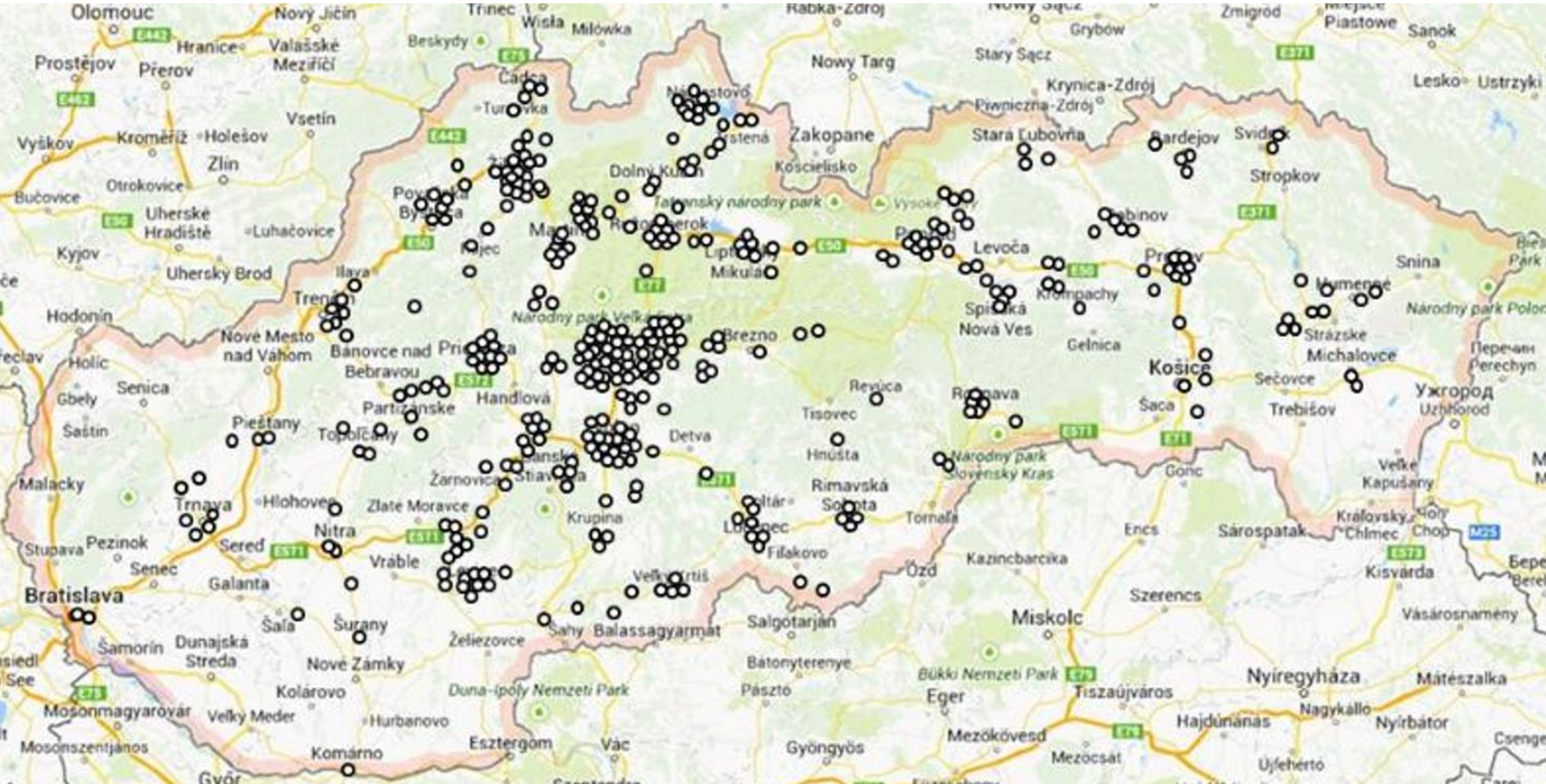
The research team (who also teaches at this university) has been monitoring the preferences and expectations of a cohort currently consisting of approximately 750 students from Matej Bel University, spanning the period from 2011 to the present. This investigation is conducted by one of the authors of this study in the form of written essays, wherein students are prompted to articulate their envisioned preferences in terms of employment, residential conditions, and family life, 10-15 years in the future (method by Cole et al., 2025b). During the review of these essays, key terms indicative of future expectations and preferences are documented. Over 2011-2024 period, these key terms have demonstrated remarkable stability. Although this research is confined to a single faculty, the diversity of students originating from across Slovakia (Figure 1) affords insights into the prevalent aspiration towards residences featuring outdoor spaces and environments conducive to child-rearing. The essay participants were approximately one-third male / two-thirds female. The average age of this cohort has been approximately 19 to 21. The majority originate from small towns (classified as micropolitan), with approximately 15% being from Banska Bystrica and its environs.
Figure 1. Origin of students in the essays research sample
Source: authors’ own elaboration
Considering aspirations of the next generation, the focus of this research is on how these expectations have materialized among individuals aged 20-40. This demographic cohort aged 20-40 fulfills two essential criteria: firstly, participation in gainful employment, and secondly, being within the biological and social prime for reproduction. A natural demographic shift towards an aging society has been observed, attributed to declining birth rates, with Slovakia having crossed a demographic threshold of more deaths than birth in 2023. Assuming no significant migration movements, the Slovak population is projected to experience a decline of approximately 18,000 to 20,000 individuals annually over the next two decades (Statistical Office of the Slovak Republic, 2025). Because of this ageing trend, there has been an overall natural reduction in the 20-40-year-olds population segment by 7.49%. Furthermore, the employed data set reveals an 18.9% reduction in work contract numbers, declining from 1.53 million in 2011 to 1.23 million in 2022 for this age group. The data accurately reflects the actual decrease in the number of employed individuals aged 20 to 40 across various regions and does not account for the societal aging factor (Figure 2).
Figure 2. Trends in the population aged 20-40 in Slovakia
Source: authors relied on the data by the Statistical Office of the Slovak Republic (2025)
4 RESULTS AND DISCUSSION
The examination of the population dynamics pertaining to the working age cohort of 20–40-year-olds will initially be illustrated through cartographic representations, providing a visual comprehension of the sectors experiencing decline. The analysis encompasses the capital, Bratislava; urban areas exceeding 50,000 inhabitants; commuter zones; micropolitan centers ranging from 10,000 to 40,000 inhabitants; and rural regions. Subsequently, other findings will include gender disparities, fertility rates, and life-style expectations.
4.1 Change in demographics
This research initially focuses on urban regional centers, with the concentration of the 20–40-year-olds sufficient to assess the demographic decline in this age cohort (Figure 3). Among the four regions analyzed, the western section of the country exhibits a more pronounced reduction in this age demographic, as seen below. The recorded decline, ranging from 18% to 32%, indicates a trend of out-migration from the inner-city core.
Figure 3. Changes in urban centers among the 20-40 cohort from 2011 to 2022.
Source: authors relied on the data by the Statistical Office of the Slovak Republic (2025)
The next measurement was focused on demographic changes in commuter zones surrounding urban areas. The delineation of the commuter zone (Figure 4) was confined to a radius of 10 km from the city center, extending to 15 km in the municipalities linked to the urban core by a 4-lane highway. Although such a short referential distance from the urban nucleus might appear limiting for the research, it needs to be noted that Slovakia maintains a degree of compactness compared to Western Europe, with absence of suburban sprawl. Taking this into account, it was observed that the reduction in the population aged 20-40 there was less pronounced than within the urban core. Notably, in Poprad, the municipality nearest the High Tatras, Slovakia’s most renowned tourist destination, there was no observed decline in the 20-40-year-old demographic. Again, a smaller decline is noted in the eastern regions. Bratislava experienced the most significant decline at 29%, likely attributable to the indistinctness of the inner suburbs from the urban areas within city boundaries, thus exhibiting a highly urbanized design.
Figure 4. Changes in commuter zones among the 20-40 cohort from 2011 to 2022
Source: authors relied on the data by the Statistical Office of the Slovak Republic (2025)
The micropolitan centers (Figure 5) can be described as scaled-down variants of urban cities, each possessing distinct socialist-era municipalities. In these micropolitan centers, a significant decline is evident among the 20–40-year-old demographic cohorts. This trend is consistently observed throughout the country, with a majority experiencing a reduction of approximately 20%.
Figure 5. Changes in micropolitan centers (10-40k pop.) among the 20-40-year-old cohorts from 2011 to 2022
Source: authors relied on the data by the Statistical Office of the Slovak Republic (2025)
Finally, we conducted an analysis of towns and villages located in rural regions, with populations fewer than 10,000, situated beyond the commuter zones of regional centers (Figure 6). Utilizing data from the Social Insurance Company, which included information on the zip codes of individuals’ workplaces, we sought to ascertain whether the individuals residing in rural areas were employed in urban centers. Nationally, 57% of the individuals residing in rural areas are engaged in employment linked to urban centers. Notably, 13.76% of institutional headquarters, encompassing both governmental and corporate entities, are positioned in or around the capital city of Bratislava, reflecting a significant level of primacy. This trend extends even to the two easternmost regions considerably distant from the capital, namely Prešov (11.10%) and Košice (12.10%). Our findings indicate a diminished rate of rural decline in the eastern part of Slovakia, with the Prešov region even exhibiting a modest increase. This outcome challenges the presupposed notion of rural decline. It is important to consider that Slovakia, being a small nation, benefits from an even distribution of cities and micropolitan centers, ensuring that individuals are seldom situated more than 30 minutes from an urban core, particularly when travelling by automobile.
Figure 6. Changes in rural areas among the 20-40 cohorts from 2011 to 2022
Source: authors relied on the data by the Statistical Office of the Slovak Republic (2025)
Using Power Business Intelligence (PowerBI), we mapped the demographic shifts in rural regions by individual municipalities, or more precisely, by specific zip codes with the populations ranging from 200 to 10,000. This analysis resulted in a discordant map (Figure 7) where the decline in population was influenced by factors that extended beyond mere economic considerations. The most significant rural demographic decline is observed in western Slovakia, outside of Bratislava. Some of these rural regions comprise feeder municipalities for erstwhile industrial economies that have vanished (e.g., coal production, arms manufacturing, textile, etc.). Individuals aged 20–40 may have redirected their interests towards service-oriented industries located outside these areas. It can be postulated that these areas are experiencing aging at a more accelerated pace compared to other regions of the country, accompanied by a slow rate of housing transfer from older to younger demographics. Although these regions are not significantly removed from urban centers to justify such a sharp decline, such a phenomenon is evident. Thus, further research is warranted to investigate the underlying reasons for this situation. Conversely, population increases are predominantly observed in the eastern part of the country, characterized by a higher concentration of the Romany community, known for its higher birthrate. During socialism, there existed a policy aimed at assimilation and control of the Roma population through enforced resettlements, predominantly in urban areas. In the post-socialist era, gentrification led to the reversal and re-establishment of Romany communities (Slovak term “osada”) in rural localities (Růžička, 2018). After 1989, many Romas were incrementally displaced to segregated rural settlements as a consequence of post-socialist housing privatization and urban gentrification, which reinforced spatial and social exclusion across eastern Slovakia (Szilvasi, 2016).
Figure 7. Change in rural zip-codes of the 20-40 cohorts in rural municipalities, pop. 200-10,000
Source: authors’ own elaboration
The data were aggregated to examine the demographic declines in the capital region as well as the western, central, and eastern regions of Slovakia (Table 3). The findings indicate an increasing tendency toward urban exodus. This phenomenon appears to be less influenced by the affordability of housing, as the prevalent concrete panel flats, remnants of the socialist era, are widely available in urban centers. These structures represent the most economical option for property acquisition when factoring in average income levels, mortgage commitments, and transportation facilities. The observed decline in the population aged 20-40 is notably less pronounced in the East, which is geographically remote from the more cosmopolitan environments of the West, the capital, and the industrial corridor of the Bratislava-Žilina-Nitra triangle. Furthermore, rural regions exhibit comparatively slower demographic decline, potentially attributable to the compactness of commuter zones. It is reasonable to infer that a degree of out-suburban and exurban commuting into urban centers occurs.
| Bratislava | West | Central | East | Total | |
|---|---|---|---|---|---|
| Urban | -29.8% | -26.7% | -26.7% | -21.8% | -27.8 |
| Commuter zone | - 28.67 | -19.0% | -22.5% | -6.47% | -21.2 |
| Micropolitan centers | - | -25.7% | -19.3% | -14.7 | -21.1 |
| Rural | - | -20.1% | -9.1% | -1.6% | -12.7 |
| Total | 29.31% | -22.1% | -17.3% | -10.9% | -20.0% |
| Source: authors’ own elaboration | |||||
4.2 Gender imbalance and fertility
This analysis aims to identify negative externalities within a municipality, facilitating the measurement of gender imbalances by zip code. Municipalities exhibiting a gender imbalance exceeding 10% were designated as ‘man camp’ or ‘female camp’. Municipalities with a population under 200 were excluded from the study. These findings are illustrated in the subsequent figures 8 and 9.
Figure 8. 2011 ‘man camps’ and ‘female camps’ for 20-40-year-old age group
Source: authors’ own elaboration
Figure 9. 2022 ‘man camps’ and ‘female camps’ for the 20-40-year-old age group
Source: authors’ own elaboration
Capital cities in post-socialist Europe display intensified socio-demographic selectivity, concentrating young, educated, and female populations while peripheral regions experience accelerated demographic depletion (Musterd et al., 2017). As anticipated, the Bratislava region exhibits the most significant gender disparity in favor of women, although this imbalance was reduced in 2022. “Female camps” are also located along the primary highway corridors between Bratislava and Žilina and Nitra. “Man camps” were predominantly situated in rural areas, particularly in the southern and eastern parts of Slovakia, where a markedly higher number of “man camps” was recorded, whereas western Slovakia featured a considerably greater presence of “female camps”. The quantity of “man camps” experienced a decline of 16.7% between the specified time periods, whereas the number of “female camps” witnessed an increase of 5.4%.
A concluding analysis examined the female reproductive rates in Slovakia, with the capability to be scrutinized at the district or county level. The Eastern region of Slovakia exhibits a marginally higher birth rate, ranging from approximately 1.65 to 1.7 births per woman. This elevated level of fertility is attributed to a larger Romany population, which tends to have a higher average of 2.1 children per woman (Szabó et al., 2021). When excluding the eastern regions (Prešov, Košice), the birthrate in the western and central regions decreases to approximately 1.45 children per woman. In comparing ‘female camps’ to fertility rates, an anomaly was identified in three districts, demonstrating both high rates of ‘female camps’ and elevated birth rates (as indicated in figures 8–9). Námestovo (~1.9-2.0 births) and Tvrdošín (~1.7-1.8 births) are mountainous municipalities in northern Slovakia, characterized by strong cultural and religious family norms associated with the Orava region. It is generally presumed that when the female population significantly exceeds the male population, the fertility rate would decrease (Schacht and Kramer, 2016; Pettay et al, 2021). However, this minor anomaly contradicts this assumption, suggesting the influence of additional factors. Senec (approximately 1.7-1.9 births), an urbanized suburb of Bratislava, presents a distinctly different dynamic.
4.3 Expectations of young adults versus reality of demographic shifts
These findings are confirmed by the articulated preferences of students as described in the essay survey conducted from 2011 to 2024. Given the long-term nature of this essay survey, being conducted every year since 2011, it allows for the observation of contrasts between Generation Y (Gen Y) and Gen Z. Earlier iterations of the survey included inquiries regarding the aspiration to seek employment abroad. Gen Y students exhibited greater independence and were more inclined to venture beyond Slovakia to secure gainful employment, or to engage in short-term work, particularly in the United Kingdom. However, post-2014, questions concerning employment abroad were omitted from the survey as most students no longer perceived a necessity for working in other countries.
Male students exhibit traditional tendencies, envisioning themselves as the primary financial providers within familial settings, aspiring to occupy positions of substantial income, ideally falling within the upper quartile of earnings. While they anticipate managerial roles, there is a lack of specificity regarding the nature of managerial responsibilities. Notably, survey data reveal aversion to low-status occupations, despite higher remuneration associated with such roles. This preference leads to the selection of higher status jobs, albeit with lower financial rewards, thereby reflecting a discrepancy between aspirations and actual circumstances. Conversely, female students express the preference for mid-level positions, frequently in managerial capacities, or administrative domains such as accounting. Predominantly, women expect their spouses to fulfill the role of principal financial provider. Automobiles, predominantly associated with male interest, were deemed reasonable, but received less attention. Conversely, a single detached residence is characterized by an attractive garden and a swimming pool. This dwelling is to be situated outside a city in Slovakia, although not in the capital, Bratislava. In later years, newly constructed bungalows have been occurring in the description of residences, expressing a desire to have two children.
Female students, like their male counterparts, aspire to reside outside of a small city (excluding Bratislava) in a single detached residence with an appealing garden and a swimming pool. They aspire to acquiring a managerial or administrative position, notwithstanding potentially low remuneration. Despite the notion of gender equality, they do not foresee themselves as primary financial providers. They express a preference for two children, with the firstborn being male. This is in line with the research by Mariscal-de-Gante et al. (2023), who pointed out that despite changing demographic dynamics, which brought a more feminized, aged, and educated working population, the occupational profile of women was still polarized relative to men.
In summary, both female and male students articulate a preference for what can be classified as the typical ‘nuclear family.’ They express a desire for low-density habitation in proximity to a small metropolitan area. Numerous students describe their professions as situated in a downtown context, while preferring residences in a smaller town (a suburb), thereby associated with the notion of car commuting, which is not perceived negatively. They aspire to possess their own land with a house on it. The exterior of the house is most frequently described using terms such as garden, swimming pool, and barbecues, among others. The term “garden” is the most common ‘descriptive’ word employed by both Millennials (born from 1981 to 1996) and Gen Z (born between 1997 and 2012). In terms of the second most prevalent term, Millennials favored “swimming pool,” whereas Gen Z preferred “bungalow.” The swimming pool, albeit impractical in Slovakia’s relatively cold climate, reflects a desire for an outdoor focal point for children and visiting friends. It also represents an appealing play space for children. The bungalow is indicative of the aspiration to reside in a ‘nuclear family’ setup, consisting of husband, wife and two children. Additionally, it signifies the preference for easy maintenance and low upkeep, alongside energy efficiency. This sought-after housing style contrasts with the previous baby boomer generation, who were more inclined towards vast multi-generational residences in small towns, or panel flats in larger towns or cities. A minority of students (approximately 5%) indicated the preference for urban living, and when they did, it pertained to luxury apartments or penthouses. This aligns with the findings of Cole and Svidroňová (2021) and Cole et al. (2025b), who also identified the prospective ambition of young individuals to reside in more rural, small-town settings rather than urban environments.
The combined analysis of administrative data and the long-term essay-based evidence reveals both a strong alignment and notable mismatches between the young adults’ stated life-course aspirations and the demographic outcomes observed across Slovak municipalities.
A clear point of alignment concerns residential location. The student essays collected between 2011 and 2024 consistently express a preference for low-density living in suburban or small-town settings, typically outside major urban cores and explicitly excluding the capital city of Bratislava. These preferences are strongly reflected in the administrative data, which show a more pronounced decline of the 20–40-year-old population in urban centers than in commuter zones, micropolitan towns, and selected rural areas. The demographic contraction of inner cities, alongside comparatively slower decline or stabilization in surrounding municipalities, suggests that suburbanization is not merely a residual outcome of housing constraints, but corresponds closely to long-articulated residential aspirations.
The second area of alignment is housing type. The essays repeatedly emphasize detached housing with private outdoor space (most frequently described through the term “garden”), while expressing limited enthusiasm for high-density apartment living. The administrative data corroborates this pattern by revealing accelerated ageing and declining representation of young adults in socialist-era panel housing estates, where housing turnover remains low and intergenerational replacement is limited.
However, important mismatches also emerge. The housing aspirations expressed in the essays, usually involving detached homes with gardens, swimming pools, or newly built bungalows, often exceed what is realistically attainable given the income levels, mortgage conditions, land availability, and construction costs. While demographic redistribution toward commuter zones is evident, the scale and quality of housing achieved by the 20–40-year-old cohort fall short of the idealized visions articulated during the student years. This suggests that suburbanization reflects constrained adaptation, rather than full realization of one’s preferences.
Further divergence is visible in employment expectations. The essays frequently describe vaguely defined, high-status, office-based occupations compatible with remote or hybrid work, whereas administrative data show a substantial decline in formal work contracts within the same age cohort. This discrepancy highlights structural labor-market constraints and signals potential over-optimism in early career expectations.
Overall, the comparison demonstrates that young adults’ preferences provide a meaningful directional signal for demographic change, even if economic and institutional constraints moderate their full realization. The alignment between aspirations and spatial outcomes challenges assumptions of inevitable urban concentration, while the mismatches underscore the importance of housing affordability and labor-market conditions in shaping demographic trajectories.
5 CONCLUDING REMARKS
During the socialist era in Czechoslovakia, the two nations were characterized by two dominant patterns: urban centers defined by high-rise panel apartments and older mid-rise brick apartments on one hand, and rural areas consisting of individual houses, many of which being large multi-generational residences on the other. As the post-transitional period progresses, newer housing solutions can be found, including both contemporary urban apartments and suburban bungalow-style homes designed for high efficiency and low maintenance.
This study has several limitations. First, the dataset sourced from the Social Insurance Company encompasses only formally employed individuals, thereby excluding informal employment, self-employed persons without contracts, and Slovak citizens working abroad. As a result, the findings primarily reflect the behavior of economically active residents and may underrepresent more mobile or economically precarious groups. Second, the qualitative component based on the essays collected from students at Matej Bel University, while being extensive and long-term, is a single institutional example and not fully representative of the national youth population.
This research draws on the expressed preferences of university students, who, based on a multi-year essay assignment, expressed the desire for a dwelling suitable for a nuclear family with two children. In an age of low fertility, examining demographic changes of the 20–40-year-old age group becomes particularly relevant. The Social Insurance Company data reveal a trend within this cohort that challenges the prevalent assumption of continual urbanization growth. At the same time, the student essays suggest a disagreement with urban planners and their ideas of residential aspiration of young adults.
The central contribution of this paper is its empirical challenge to the widely held assumption, common in urban economics and spatial planning, that demographic change among young adults necessarily reinforces urban concentration. The flawed assumption among geographical economists is that continued urban growth reflects individual residential preferences. Insights from the students’ essays challenge this view, given the word ‘garden’ being the main descriptor every year. Coupled with the demographic changes between 2011 and 2022, these findings reveal a more pronounced decline in the 20–40-year-old population within urban cores compared to commuter zones, towns, and rural areas. This observation addresses RQ1 and indicates a redistribution of young adults away from urban centers. This finding suggests that observed urban growth in some contexts may reflect institutional, regulatory, or housing supply constraints, rather than real residential preference of young people.
Panel flats in urban areas are experiencing a decline in young residents, largely due to low housing turnover, as long term residents prefer to remain and age in one place. This finding responds to RQ2 regarding the changes in the housing mix for 20-40-year-olds. During the socialist period, alternatives to panel flats were in villages, where large multi-generational homes were common. From the 1980s, housing policies shifted away from centrally planned communities, permitting individual homeownership and construction (Faltan and Dodder, 1995), aligning with Slovak social norms emphasizing family cohesion and intergenerational support. Multi-generational housing facilitated shared responsibilities and economic efficiency (Cohn, 2010). By design, villages inherently promote greater intergenerational sharing and transition, potentially increasing the presence of young adults. Empirical evidence consistently shows that suburban and low-density residential environments are associated with higher fertility levels than dense urban cores, reflecting the interaction between residential context, family aspirations, and childbearing behavior (Kulu and Boyle, 2009).
RQ3 provides evidence of persistent gender imbalances (“man camps” and “female camps”) across municipalities and shows how these imbalances intersect with fertility patterns. This adds to the SDT theory by demonstrating that local sex ratios can amplify or mitigate low fertility outcomes. Historically, urban centers have attracted female populations, exacerbating gender imbalances; our current findings corroborate this, albeit to a lesser extent in the eastern regions. Predictably, Bratislava and the tri-state area adjacent to the Czech/Polish/Slovak border host a substantial concentration of ‘female camps’, while ‘man camps’ predominate in agricultural regions. Fertility rates are notably influenced by the significant presence of the Romany community in Eastern and Central Slovakia. When focusing solely on western Slovakia, the suboptimal birth rate reveals an unfavorable demographic trend for the future. Overall, these patterns are consistent with findings by Josipovič (2024) on post-Yugoslav countries, where deep population ageing has become widespread, with Slovenia as a partial exception. Results also align with the SDT prediction (Aassve et al., 2024), suggesting an eventual convergence of fertility behavior across all European countries.
With respect to RQ4, the expressed preferences in the student essays indicate a shift from socialist era housing blocks. By integrating revealed demographic behavior with long-term qualitative evidence on the young adults’ stated preferences, the paper shows a persistent aspiration for low-density, suburban living – characterized by detached housing and access to private outdoor spaces. These preferences remain stable across generations (Gen Y and Gen Z) and contrast with the dominant planning agendas that prioritize compact cities and inner-city densification. The declining presence of young adults in panel housing, combined with new suburban development suggests that housing policy should prioritize flexible zoning, faster issuance of construction permits and support for small scale residential development in commuter zones and micropolitan towns.
The novelty of this study lies in its integration of administrative microdata, capturing the revealed demographic behavior with qualitative evidence on the stated life-course aspirations, and finally allowing a rare comparison between the intended and realized spatial-demographic outcomes.
From the policy perspective, these findings highlight the need to align work locations and housing supply with residential preferences of young adults. Further research should examine the intersection of demographic behavior with housing affordability, access to mortgages and how future work will be performed. Comparative studies across CEE countries along with census data, migration statistics, and mobile phone data could improve understanding of population distribution. Expanding qualitative research beyond a single institution would provide a more nuanced understanding of youth’s aspirations and constraints.
The work was supported by the APVV-22-0090 (Application of behavioral economics in the mapping of preferences in the areas of housing, employment and transport mobility).
Data availability statement
Data available at the corresponding author upon a reasonable request.
Ethics Approval
Research was approved by the Ethical Committee of Matej Bel University in Slovakia under no. 294/2025.
Coauthor contributions
David Cole: Conceptualization, Methodology, Formal Analysis, Writing - Original Draft
Maria Murray Svidroňová: Data Curation, Investigation, Methodology, Validation, Writing - Review & Editing
Jolana Gubalova: Methodology, Formal Analysis, Visualization, Writing - Original Draft
Petra Strnadova: Investigation, Writing - Review & Editing
References
- Aassve, A., Mencarini, L., Pirani, E., & Vignoli, D. (2024). The last bastion is falling: Survey evidence of the new family reality in Italy. Population and Development Review, 50(4), 1267-1288. https://doi.org/10.1111/padr.12645
- Aguinis, H., Beaty, J. C., Boik, R. J., & Pierce, C. A. (2005). Effect size and power in assessing moderating effects of categorical variables using multiple regression: A 30-year review. Journal of Applied Psychology, 90(1), 94-107. https://doi.org/10.1037/0021-9010.90.1.94
- Ajzen, I. (1991). The theory of planned behavior. Organizational Behavior and Human Decision Processes, 50(2), 179-211. https://doi.org/10.1016/0749-5978(91)90020-T
- Balsalobre-Lorente, D., Sinha, A., Driha, O. M., & Mubarik, M. S. (2021). Assessing the impacts of ageing and natural resource extraction on carbon emissions: a proposed policy framework for European economies. Journal of Cleaner Production, 296, 126470. https://doi.org/10.1016/j.jclepro.2021.126470
- Becker, G. S. (1960). An economic analysis of fertility. In G. B. Roberts (Ed.), Demographic and Economic Change in Developed Countries (pp. 209-240). Columbia University Press. https://www.nber.org/books-and-chapters/demographic-and-economic-change-developed-countries/economic-analysis-fertility
- Billari, F. C., & Liefbroer, A. C. (2010). Towards a new pattern of transition to adulthood?. Advances in Life Course Research, 15(2-3), 59-75. https://doi.org/10.1016/j.alcr.2010.10.003
- Bleha, B. (2019). How much can societal turning points affect forecasts’ accuracy in Europe? Case of post-communistic transformation in Slovakia and the Czech Republic. European Journal of Futures Research, 7(1), 6. https://doi.org/10.1186/s40309-019-0158-z
- Bleha, B., & Šprocha, B. (2020). Trends in demography and migration in Slovakia: From one of the most progressive to one of the most decreasing. In P. Tálas & A. Etl (Eds.), Demography and Migration in Central and Eastern Europe (pp. 143-155). Ludovika University Press. https://openaccess.ludovika.hu/nke/catalog/view/319/4267/10033
- Bourdieu, P. (1962). Célibat et condition paysanne. Études Rurales, 5-6, 32-135. https://www.persee.fr/doc/rural_0014-2182_1962_num_5_1_1011
- Brink, K. E., & Zondag, M. M. (2021). Examining job attribute preferences across three generational cohorts. Journal of Career Development, 48(1), 60-72. https://doi.org/10.1177/0894845319837384
- Cohn, D. (2010). Multi-Generational Households in Europe. Pew Research Center. https://www.pewresearch.org/social-trends/2010/10/08/multi-generational-households-in-europe/
- Cole, D., & Svidroňová, M. M. (2021). Are small towns doomed to decline? The case of a post-socialist CEE country. Post-Communist Economies, 33(8), 1012-1034. https://doi.org/10.1080/14631377.2021.1886786
- Cole, D., Murray Svidroňová, M., Gubalová, J., & Strnádová, P. (2025a). The urban/rural community divide based on a geo-economic perspective: An analysis of work contracts in Slovakia. Quaestiones Geographicae, 44(2), 137-147. https://doi.org/10.14746/quageo-2025-0019
- Cole, D., Svidroňová, M. M., & Muthová, N. J. (2025b). Rural versus urban living: Gens Y and Z in Slovakia. Cities, 161, 105927. https://doi.org/10.1016/j.cities.2025.105927
- Cooley, T., Nusbaum, E., & Henriksen, E. (2019). 2019 Meeting Papers. https://ideas.repec.org/p/red/sed019/1352.html
- Demel, S., Mariel, P., & Meyerhoff, J. (2019). Job preferences of business and economics students. International Journal of Manpower, 40(3), 473-499. https://doi.org/10.1108/IJM-09-2017-0249
- England, K., & Azzopardi-Muscat, N. (2017). Demographic trends and public health in Europe. The European Journal of Public Health, 27(suppl_4), 9-13. https://doi.org/10.1093/eurpub/ckx159
- Esser, I., & Lindh, A. (2018). Job preferences in comparative perspective 1989–2015: A multidimensional evaluation of individual and contextual influences. International Journal of Sociology, 48(2), 142-169. https://doi.org/10.1080/00207659.2018.1446118
- Faltan, L., & Dodder, R. A. (1995). Privatizing the housing sector: The case of Slovakia. Public Administration and Development, 15(4), 391-396. https://doi.org/10.1002/pad.4230150404
- Fong, J., Janzow, P., & Peck, K. (2016). Demographic shifts in educational demand and the rise of alternative credentials. University Professional and Continuing Education Association (UPCEA). https://upcea.edu/wp-content/uploads/2017/11/Demographic-Shifts-in-Educational-Demand-and-the-Rise-of-Alternative-Credentials.pdf
- Gentile, M., Tammaru, T., & Van Kempen, R. (2012). Heteropolitanization: Social and spatial change in Central and East European cities. Cities, 29(5), 291-299. https://doi.org/10.1016/j.cities.2012.05.005
- Gu, D., Andreev, K., & Dupre, M. E. (2021). Major trends in population growth around the world. China CDC Weekly, 3(28), 604-613. https://doi.org/10.46234/ccdcw2021.160
- Gulczyński, M. (2023). Migration and Skewed Subnational Sex Ratios among Young Adults. Population and Development Review, 49(3), 681-706. https://doi.org/10.1111/padr.12577
- Havel, V. (1978). The power of the powerless. International Center on Nonviolent Conflict. https://www.nonviolent-conflict.org/wp-content/uploads/1979/01/the-power-of-the-powerless.pdf
- Johnson Jr, J. H., & Parnell, A. M. (2017). The challenges and opportunities of the American demographic shift. Generations, 40(4), 9-15. https://www.semanticscholar.org/paper/The-Challenges-and-Opportunities-of-the-American-Johnson-Parnell/2eb26e0659263aa1148a47e83fe448677475fa37
- Johnson, S. (2024). From economic turbulence to demographic change: Tracing the pathways of the second demographic transition in post-socialist contexts. AUC Geographica, 60(1), 24-45. https://doi.org/10.14712/23361980.2024.15
- Josipovič, D. (2024). Depopulation and deep aging: the former Yugoslav and Western Balkans space between the second demographic transition and emigration. Stanovništvo, 62(S1), S57-S84. https://doi.org/10.59954/stnv.615
- King, E. M., Randolph, H. L., Floro, M. S., & Suh, J. (2021). Demographic, health, and economic transitions and the future care burden. World Development, 140, 105371. https://doi.org/10.1016/j.worlddev.2020.105371
- Kovač Orlandić, M. (2023). Students’ jobs – the necessity of labour law protection. Stanovništvo, 61(2), 69-84. https://doi.org/10.59954/stnv.541
- Kulu, H., & Boyle, P. J. (2009). High fertility in city suburbs: Compositional or contextual effects?. European Journal of Population, 25(2), 157-174. https://doi.org/10.1007/s10680-008-9163-9
- Kährik, A., Temelová, J., Kadarik, K., & Kubeš, J. (2015). What attracts people to inner city areas? The cases of two post-socialist cities in Estonia and the Czech Republic. Urban Studies, 53(2), 355-372. https://doi.org/10.1177/0042098014567444
- Lesthaeghe, R. (2014). The second demographic transition: A concise overview of its development. Proceedings of the National Academy of Sciences, 111(51), 18112-18115. https://doi.org/10.1073/pnas.1420441111
- Lutz, W., Sanderson, W., & Scherbov, S. (2001). The end of world population growth. Nature, 412(6846), 543-545. https://doi.org/10.1038/35087589
- Malazdrewicz, S., Ostrowski, K. A., & Sadowski, Ł. (2022). Large panel system technology in the second half of the twentieth century—Literature review, recycling possibilities and research gaps. Buildings, 12(11), 1822. https://doi.org/10.3390/buildings12111822
- Malý, I., Mikušová Meričková, B., Murray Svidroňová, M., & Jakuš Muthová, N. (2025). Public administration and youth: Study of value orientation. Journal of Public Affairs Education. https://doi.org/10.1177/15236803251392710
- Marinković, I. (2022). The effect of avoidable mortality on life expectancy in Serbia, 2010-2019. Stanovništvo, 60(1), 53-68. https://doi.org/10.2298/STNV220403001M
- Mariscal-de-Gante, Á., Palencia-Esteban, A., Grubanov-Boskovic, S., & Fernández-Macías, E. (2023). Feminization, ageing, and occupational change in Europe in the last 25 years. Population and Development Review, 49(4), 939-966. https://doi.org/10.1111/padr.12586
- Maňák, V. (2009). Retro-invaze na Husákovy děti. ČT24 (Česká Televize). https://ct24.ceskatelevize.cz/clanek/nazory/retro-invaze-na-husakovy-deti-182739
- Meyerding, S. G. (2018). Job preferences of agricultural students in Germany – A choice-based conjoint analysis for both genders. International Food and Agribusiness Management Review, 21(2), 219-236. https://doi.org/10.22434/IFAMR2017.0060
- Mládek, J., Bleha, B., Káčerová, M., Marenčáková, J., & Podolák, P. (2009). Population processes changes in Slovakia at the end of the 20th and beginning of the 21st centuries. Geographia Slovaca, 26, 49-70. https://www.sav.sk/journals/uploads/12131149GS_26.pdf
- Muenz, R. (2007). Aging and demographic change in European societies: Main trends and alternative policy options. The World Bank. https://ideas.repec.org/p/wbk/hdnspu/39174.html
- Mulder, C. H., & Billari, F. C. (2010). Homeownership regimes and low fertility. Housing Studies, 25(4), 527-541. https://doi.org/10.1080/02673031003711469
- Murray Svidroňová, M., Cole, D., & Gubalová, J. (2019). The nostalgianomics and living preference in Slovakia. Lex Localis - Journal of Local Self-Government, 17(3), 873-895. https://doi.org/10.4335/17.3.873-895(2019)
- Musterd, S., Marcińczak, S., Van Ham, M., & Tammaru, T. (2017). Socioeconomic segregation in European capital cities. Increasing separation between poor and rich. Urban Geography, 38(7), 1062-1083. https://doi.org/10.1080/02723638.2016.1228371
- Newsham, N., & Rowe, F. (2023). Understanding trajectories of population decline across rural and urban Europe: A sequence analysis. Population, Space and Place, 29(3), e2630. https://doi.org/10.1002/psp.2630
- Nikitović, V., Magdalenić, I., & Arsenović, D. (2024). The demographic future of Western Balkans: Between depopulation and immigration. In K. N. Zafeiris, B. Kotzamanis, & C. Skiadas (Eds.), Population Studies in the Western Balkans (pp. 19-43). Springer Nature. https://doi.org/10.1007/978-3-031-53088-3_2
- Notestein, F. W. (1945). Population: The long view. In T. W. Schultz (Ed.), Food for the World (pp. 36-57). University of Chicago Press.
- Oliveira, L. B., & Cordeiro, C. D. L. (2025). What do young adults want? A study about their job preferences. Brazilian Business Review, 22, e20231341. https://doi.org/10.15728/bbr.2023.1341.en
- Pekarek, S. (2018). Population aging and economic dependency ratio: Comparative study of the Czech Republic and Slovakia. Ecoforum Journal, 7(1), 1-10. https://ecoforumjournal.ro/index.php/eco/article/view/2084
- Pettay, J. E., Lummaa, V., & Helle, S. (2021). Female-biased sex ratios in urban centers create a ‘fertility trap’ in post-war Finland. Behavioral Ecology, 32(4), 590-598. https://doi.org/10.1093/beheco/arab011
- Pilková, A., & Mikuš, J. (2020). Slovakia. In Á. Ní Léime, J. Ogg, M. Rašticová, D. Street, C. Krekula, & M. Bédiová (Eds.), Extended Working Life Policies (pp. 407-416). Springer. https://doi.org/10.1007/978-3-030-40985-2_32
- Rauvola, R. S., Rudolph, C. W., & Zacher, H. (2019). Generationalism: Problems and implications. Organizational Dynamics, 48(4), 1-9. https://doi.org/10.1016/j.orgdyn.2018.05.006
- Ravenstein, E. G. (1885). The laws of migration. Journal of the Statistical Society of London, 48(2), 167-227. https://doi.org/10.2307/2979181
- Remeta, J., Perret, S., Jareš, M., & Brys, B. (2015). Moving beyond the flat tax: Tax policy reform in the Slovak Republic. OECD Publishing. https://doi.org/10.1787/5js4rtzr3ws2-en
- Růžička, M. (2018). Czechoslovakia launched the forced resettlement of Romani people 53 years ago. Romea.Cz. https://romea.cz/en/world/czechoslovakia-launched-the-forced-resettlement-of-romani-people-53-years-ago
- Schacht, R., & Kramer, K. L. (2016). Patterns of family formation in response to sex ratio variation. PloS One, 11(8), e0160320. https://doi.org/10.1371/journal.pone.0160320
- Slavíková, N., & Šprocha, B. (2023). Internal migration from and to municipalities in Slovakia with the highest proportion of people living in Roma settlements. Demografie, 65(4), 183-199. https://doi.org/10.54694/dem.0321
- Sobotka, T., & Berghammer, C. (2021). Demography of family change in Europe. In N. F. Schneider & M. Kreyenfeld (Eds.), Research Handbook on the Sociology of the Family (pp. 162-186). Edward Elgar Publishing. https://doi.org/10.4337/9781788975544.00019
- Sobotka, T., & Fürnkranz-Prskawetz, A. (2020). Demographic change in Central, Eastern and Southeastern Europe: Trends, determinants and challenges. In R. Holzmann, T. Eichhorst, R. Konle-Seidl, & M. Pohl (Eds.), 30 Years of Transition in Europe (pp. 196-222). Edward Elgar Publishing. https://doi.org/10.4337/9781839109508.00027
- Sobotka, T., Zeman, K., & Kantorová, V. (2003). Demographic shifts in the Czech Republic after 1989: A second demographic transition view. European Journal of Population, 19, 249-277. https://doi.org/10.1023/A:1024913321935
- Spitzer, S., & Reiter, C. (2024). Demographic change, healthcare, and long-term care. In A. Renner, M. Bauer, & J. Kuhlmann (Eds.), Handbook of Social Infrastructure (pp. 57-85). Edward Elgar Publishing. https://doi.org/10.4337/9781800883130.00012
- Statistical Office of the Slovak Republic. (2025). Demographic development in Slovakia in 2024. https://slovak.statistics.sk/wps/portal/ext/products/informationmessages/inf_sprava_detail/!ut/p/z1/rVRNc9owFPwrycFHoacPY7k3wxAMJaRAIOBLRxYSdsE2MQ6U_vrKSWZaZsrHoT7Zo7erffv2GUd4jqNc7tOVrNIilxv7vYia30deT7RaJABoDRj0-l8nw7D9QLtTF7-cFojhuAO95-Bbd9znBLiLI3scjEajyWA2g-6MPkCPkS4Mp1PL1sQzHOFI5dW2SvCiiHcyQTpHaW6QXFcO2JeizKyafa7RblvK_dEBWaok3TvAPWqIoTEiWjDEjWEo5i5DQinqu6CET7yafqvSJV6IWBISE4b82APEqTYoVgbQUjBlDFGULuVnOxf0RrfY0e4GIfcGAGLQdaEXhNOxP2IMAnaKf2r71q1-2Ay41yFPM_KJhzNPALfhLwiMLtO_1H5d6eAaR3Rx5s_NKwXW5GFYZBpPdI4Xth_vbOnYGr5P9QFP8zolGzz5M27XuIRRDsgsdRNxrijyqRTIc02sKBDGlItDwP1rYuwK0PKx_biyzLJK6mwWeL6WldwUq7u_AnpUyd17RGtI-uP1NQpstIu80j8rPP_I9m7twK6y5Qq9n-Q249uyWL6tq-OZtF-86cOfc_O28T_rz03r0L-W9_Od_t8ttkLSOGscVNaAhic8YJ4nOOV-02WsVhHkMRN2RKU2utRl4620P6-kqra7Lw44cDgcGquiWG10QxWZA_-CJMXOqj-txNtsmgl2TNMUrcfh4bHDeBQf2a_WEEWxu9kPgvv737dK5j8!/dz/d5/L2dBISEvZ0FBIS9nQSEh/
- Steinführer, A., & Haase, A. (2007). Demographic change as a future challenge for cities in East Central Europe. Geografiska Annaler: Series B, Human Geography, 89(2), 183-195. https://doi.org/10.1111/j.1468-0467.2007.00247.x
- Szabó, L., Kiss, I., Šprocha, B., & Spéder, Z. (2021). Fertility of Roma Minorities in Central and Eastern Europe. Comparative Population Studies, 46, 387-424. https://doi.org/10.12765/CPoS-2021-14
- Szilvasi, M. (2016). Separate, Unequal and Hazardous: The essential guide to Roma housing in Slovakia. European Roma Rights Centre. https://www.errc.org/news/separate-unequal-and-hazardous-the-essential-guide-to-roma-housing-in-slovakia
- United Nations, Department of Economic and Social Affairs, Population Division. (2023). World population ageing 2023: Challenges and opportunities of population ageing in the least developed countries. https://desapublications.un.org/publications/world-population-ageing-2023-challenges-and-opportunities-population-ageing-least
- Van de Kaa, D. J. (2001). Postmodern fertility preferences: From changing value orientation to new behavior. Population and Development Review, 27, 290-331. https://www.jstor.org/stable/3115262
- Willekens, F. (2015). Demographic transitions in Europe and the world. In K. Matthijs, S. Hin, A. Kok, & J. Van Bavel (Eds.), Population Change in Europe, the Middle-East and North Africa (pp. 13-44). Taylor & Francis. https://www.taylorfrancis.com/chapters/oa-edit/10.4324/9781315601496-3/demographic-transitions-europe-world-frans-willekens
- Zaidi, B., & Morgan, S. P. (2017). The second demographic transition theory: A review and appraisal. Annual Review of Sociology, 43(1), 473-492. https://doi.org/10.1146/annurev-soc-060116-053442
- Zarecor, K. E. (2011). Manufacturing a socialist modernity: Housing in Czechoslovakia, 1945–1960. University of Pittsburgh Press. https://upittpress.org/books/9780822944041/
- Zrinščak, S., & Lawrence, S. (2014). Active ageing and demographic change: challenges for social work and social policy. European Journal of Social Work, 17(3), 313-321. https://doi.org/10.1080/13691457.2014.919088
- Zvezdanović Lobanova, J., Kelić, V., & Zvezdanović, M. (2025). Population Ageing and Gender Gap: A Dual Challenge to Economic Growth. Stanovništvo, 63(1), 29-50. https://doi.org/10.59954/stnv.681
- Šebo, J., Danková, D., & Králik, I. (2020). Projecting a life-cycle income–a simulation model for the Slovak pension benefit statement. Olsztyn Economic Journal, 15(4), 271-284. https://doi.org/10.31648/oej.6380
Article Details
Published by the Institute of Social Sciences - Center for Demographic Research




References
Aguinis, H., Beaty, J. C., Boik, R. J., & Pierce, C. A. (2005). Effect size and power in assessing moderating effects of categorical variables using multiple regression: A 30-year review. Journal of Applied Psychology, 90(1), 94-107. https://doi.org/10.1037/0021-9010.90.1.94
Ajzen, I. (1991). The theory of planned behavior. Organizational Behavior and Human Decision Processes, 50(2), 179-211. https://doi.org/10.1016/0749-5978(91)90020-T
Balsalobre-Lorente, D., Sinha, A., Driha, O. M., & Mubarik, M. S. (2021). Assessing the impacts of ageing and natural resource extraction on carbon emissions: a proposed policy framework for European economies. Journal of Cleaner Production, 296, 126470. https://doi.org/10.1016/j.jclepro.2021.126470
Becker, G. S. (1960). An economic analysis of fertility. In G. B. Roberts (Ed.), Demographic and Economic Change in Developed Countries (pp. 209-240). Columbia University Press. https://www.nber.org/books-and-chapters/demographic-and-economic-change-developed-countries/economic-analysis-fertility
Billari, F. C., & Liefbroer, A. C. (2010). Towards a new pattern of transition to adulthood?. Advances in Life Course Research, 15(2-3), 59-75. https://doi.org/10.1016/j.alcr.2010.10.003
Bleha, B. (2019). How much can societal turning points affect forecasts’ accuracy in Europe? Case of post-communistic transformation in Slovakia and the Czech Republic. European Journal of Futures Research, 7(1), 6. https://doi.org/10.1186/s40309-019-0158-z
Bleha, B., & Šprocha, B. (2020). Trends in demography and migration in Slovakia: From one of the most progressive to one of the most decreasing. In P. Tálas & A. Etl (Eds.), Demography and Migration in Central and Eastern Europe (pp. 143-155). Ludovika University Press. https://openaccess.ludovika.hu/nke/catalog/view/319/4267/10033
Bourdieu, P. (1962). Célibat et condition paysanne. Études Rurales, 5-6, 32-135. https://www.persee.fr/doc/rural_0014-2182_1962_num_5_1_1011
Brink, K. E., & Zondag, M. M. (2021). Examining job attribute preferences across three generational cohorts. Journal of Career Development, 48(1), 60-72. https://doi.org/10.1177/0894845319837384
Cohn, D. (2010). Multi-Generational Households in Europe. Pew Research Center. https://www.pewresearch.org/social-trends/2010/10/08/multi-generational-households-in-europe/
Cole, D., & Svidroňová, M. M. (2021). Are small towns doomed to decline? The case of a post-socialist CEE country. Post-Communist Economies, 33(8), 1012-1034. https://doi.org/10.1080/14631377.2021.1886786
Cole, D., Murray Svidroňová, M., Gubalová, J., & Strnádová, P. (2025a). The urban/rural community divide based on a geo-economic perspective: An analysis of work contracts in Slovakia. Quaestiones Geographicae, 44(2), 137-147. https://doi.org/10.14746/quageo-2025-0019
Cole, D., Svidroňová, M. M., & Muthová, N. J. (2025b). Rural versus urban living: Gens Y and Z in Slovakia. Cities, 161, 105927. https://doi.org/10.1016/j.cities.2025.105927
Cooley, T., Nusbaum, E., & Henriksen, E. (2019). 2019 Meeting Papers. https://ideas.repec.org/p/red/sed019/1352.html
Demel, S., Mariel, P., & Meyerhoff, J. (2019). Job preferences of business and economics students. International Journal of Manpower, 40(3), 473-499. https://doi.org/10.1108/IJM-09-2017-0249
England, K., & Azzopardi-Muscat, N. (2017). Demographic trends and public health in Europe. The European Journal of Public Health, 27(suppl_4), 9-13. https://doi.org/10.1093/eurpub/ckx159
Esser, I., & Lindh, A. (2018). Job preferences in comparative perspective 1989–2015: A multidimensional evaluation of individual and contextual influences. International Journal of Sociology, 48(2), 142-169. https://doi.org/10.1080/00207659.2018.1446118
Faltan, L., & Dodder, R. A. (1995). Privatizing the housing sector: The case of Slovakia. Public Administration and Development, 15(4), 391-396. https://doi.org/10.1002/pad.4230150404
Fong, J., Janzow, P., & Peck, K. (2016). Demographic shifts in educational demand and the rise of alternative credentials. University Professional and Continuing Education Association (UPCEA). https://upcea.edu/wp-content/uploads/2017/11/Demographic-Shifts-in-Educational-Demand-and-the-Rise-of-Alternative-Credentials.pdf
Gentile, M., Tammaru, T., & Van Kempen, R. (2012). Heteropolitanization: Social and spatial change in Central and East European cities. Cities, 29(5), 291-299. https://doi.org/10.1016/j.cities.2012.05.005
Gu, D., Andreev, K., & Dupre, M. E. (2021). Major trends in population growth around the world. China CDC Weekly, 3(28), 604-613. https://doi.org/10.46234/ccdcw2021.160
Gulczyński, M. (2023). Migration and Skewed Subnational Sex Ratios among Young Adults. Population and Development Review, 49(3), 681-706. https://doi.org/10.1111/padr.12577
Havel, V. (1978). The power of the powerless. International Center on Nonviolent Conflict. https://www.nonviolent-conflict.org/wp-content/uploads/1979/01/the-power-of-the-powerless.pdf
Johnson Jr, J. H., & Parnell, A. M. (2017). The challenges and opportunities of the American demographic shift. Generations, 40(4), 9-15. https://www.semanticscholar.org/paper/The-Challenges-and-Opportunities-of-the-American-Johnson-Parnell/2eb26e0659263aa1148a47e83fe448677475fa37
Johnson, S. (2024). From economic turbulence to demographic change: Tracing the pathways of the second demographic transition in post-socialist contexts. AUC Geographica, 60(1), 24-45. https://doi.org/10.14712/23361980.2024.15
Josipovič, D. (2024). Depopulation and deep aging: the former Yugoslav and Western Balkans space between the second demographic transition and emigration. Stanovništvo, 62(S1), S57-S84. https://doi.org/10.59954/stnv.615
King, E. M., Randolph, H. L., Floro, M. S., & Suh, J. (2021). Demographic, health, and economic transitions and the future care burden. World Development, 140, 105371. https://doi.org/10.1016/j.worlddev.2020.105371
Kovač Orlandić, M. (2023). Students’ jobs – the necessity of labour law protection. Stanovništvo, 61(2), 69-84. https://doi.org/10.59954/stnv.541
Kulu, H., & Boyle, P. J. (2009). High fertility in city suburbs: Compositional or contextual effects?. European Journal of Population, 25(2), 157-174. https://doi.org/10.1007/s10680-008-9163-9
Kährik, A., Temelová, J., Kadarik, K., & Kubeš, J. (2015). What attracts people to inner city areas? The cases of two post-socialist cities in Estonia and the Czech Republic. Urban Studies, 53(2), 355-372. https://doi.org/10.1177/0042098014567444
Lesthaeghe, R. (2014). The second demographic transition: A concise overview of its development. Proceedings of the National Academy of Sciences, 111(51), 18112-18115. https://doi.org/10.1073/pnas.1420441111
Lutz, W., Sanderson, W., & Scherbov, S. (2001). The end of world population growth. Nature, 412(6846), 543-545. https://doi.org/10.1038/35087589
Malazdrewicz, S., Ostrowski, K. A., & Sadowski, Ł. (2022). Large panel system technology in the second half of the twentieth century—Literature review, recycling possibilities and research gaps. Buildings, 12(11), 1822. https://doi.org/10.3390/buildings12111822
Malý, I., Mikušová Meričková, B., Murray Svidroňová, M., & Jakuš Muthová, N. (2025). Public administration and youth: Study of value orientation. Journal of Public Affairs Education. https://doi.org/10.1177/15236803251392710
Marinković, I. (2022). The effect of avoidable mortality on life expectancy in Serbia, 2010-2019. Stanovništvo, 60(1), 53-68. https://doi.org/10.2298/STNV220403001M
Mariscal-de-Gante, Á., Palencia-Esteban, A., Grubanov-Boskovic, S., & Fernández-Macías, E. (2023). Feminization, ageing, and occupational change in Europe in the last 25 years. Population and Development Review, 49(4), 939-966. https://doi.org/10.1111/padr.12586
Maňák, V. (2009). Retro-invaze na Husákovy děti. ČT24 (Česká Televize). https://ct24.ceskatelevize.cz/clanek/nazory/retro-invaze-na-husakovy-deti-182739
Meyerding, S. G. (2018). Job preferences of agricultural students in Germany – A choice-based conjoint analysis for both genders. International Food and Agribusiness Management Review, 21(2), 219-236. https://doi.org/10.22434/IFAMR2017.0060
Mládek, J., Bleha, B., Káčerová, M., Marenčáková, J., & Podolák, P. (2009). Population processes changes in Slovakia at the end of the 20th and beginning of the 21st centuries. Geographia Slovaca, 26, 49-70. https://www.sav.sk/journals/uploads/12131149GS_26.pdf
Muenz, R. (2007). Aging and demographic change in European societies: Main trends and alternative policy options. The World Bank. https://ideas.repec.org/p/wbk/hdnspu/39174.html
Mulder, C. H., & Billari, F. C. (2010). Homeownership regimes and low fertility. Housing Studies, 25(4), 527-541. https://doi.org/10.1080/02673031003711469
Murray Svidroňová, M., Cole, D., & Gubalová, J. (2019). The nostalgianomics and living preference in Slovakia. Lex Localis - Journal of Local Self-Government, 17(3), 873-895. https://doi.org/10.4335/17.3.873-895(2019)
Musterd, S., Marcińczak, S., Van Ham, M., & Tammaru, T. (2017). Socioeconomic segregation in European capital cities. Increasing separation between poor and rich. Urban Geography, 38(7), 1062-1083. https://doi.org/10.1080/02723638.2016.1228371
Newsham, N., & Rowe, F. (2023). Understanding trajectories of population decline across rural and urban Europe: A sequence analysis. Population, Space and Place, 29(3), e2630. https://doi.org/10.1002/psp.2630
Nikitović, V., Magdalenić, I., & Arsenović, D. (2024). The demographic future of Western Balkans: Between depopulation and immigration. In K. N. Zafeiris, B. Kotzamanis, & C. Skiadas (Eds.), Population Studies in the Western Balkans (pp. 19-43). Springer Nature. https://doi.org/10.1007/978-3-031-53088-3_2
Notestein, F. W. (1945). Population: The long view. In T. W. Schultz (Ed.), Food for the World (pp. 36-57). University of Chicago Press.
Oliveira, L. B., & Cordeiro, C. D. L. (2025). What do young adults want? A study about their job preferences. Brazilian Business Review, 22, e20231341. https://doi.org/10.15728/bbr.2023.1341.en
Pekarek, S. (2018). Population aging and economic dependency ratio: Comparative study of the Czech Republic and Slovakia. Ecoforum Journal, 7(1), 1-10. https://ecoforumjournal.ro/index.php/eco/article/view/2084
Pettay, J. E., Lummaa, V., & Helle, S. (2021). Female-biased sex ratios in urban centers create a ‘fertility trap’ in post-war Finland. Behavioral Ecology, 32(4), 590-598. https://doi.org/10.1093/beheco/arab011
Pilková, A., & Mikuš, J. (2020). Slovakia. In Á. Ní Léime, J. Ogg, M. Rašticová, D. Street, C. Krekula, & M. Bédiová (Eds.), Extended Working Life Policies (pp. 407-416). Springer. https://doi.org/10.1007/978-3-030-40985-2_32
Rauvola, R. S., Rudolph, C. W., & Zacher, H. (2019). Generationalism: Problems and implications. Organizational Dynamics, 48(4), 1-9. https://doi.org/10.1016/j.orgdyn.2018.05.006
Ravenstein, E. G. (1885). The laws of migration. Journal of the Statistical Society of London, 48(2), 167-227. https://doi.org/10.2307/2979181
Remeta, J., Perret, S., Jareš, M., & Brys, B. (2015). Moving beyond the flat tax: Tax policy reform in the Slovak Republic. OECD Publishing. https://doi.org/10.1787/5js4rtzr3ws2-en
Růžička, M. (2018). Czechoslovakia launched the forced resettlement of Romani people 53 years ago. Romea.Cz. https://romea.cz/en/world/czechoslovakia-launched-the-forced-resettlement-of-romani-people-53-years-ago
Schacht, R., & Kramer, K. L. (2016). Patterns of family formation in response to sex ratio variation. PloS One, 11(8), e0160320. https://doi.org/10.1371/journal.pone.0160320
Slavíková, N., & Šprocha, B. (2023). Internal migration from and to municipalities in Slovakia with the highest proportion of people living in Roma settlements. Demografie, 65(4), 183-199. https://doi.org/10.54694/dem.0321
Sobotka, T., & Berghammer, C. (2021). Demography of family change in Europe. In N. F. Schneider & M. Kreyenfeld (Eds.), Research Handbook on the Sociology of the Family (pp. 162-186). Edward Elgar Publishing. https://doi.org/10.4337/9781788975544.00019
Sobotka, T., & Fürnkranz-Prskawetz, A. (2020). Demographic change in Central, Eastern and Southeastern Europe: Trends, determinants and challenges. In R. Holzmann, T. Eichhorst, R. Konle-Seidl, & M. Pohl (Eds.), 30 Years of Transition in Europe (pp. 196-222). Edward Elgar Publishing. https://doi.org/10.4337/9781839109508.00027
Sobotka, T., Zeman, K., & Kantorová, V. (2003). Demographic shifts in the Czech Republic after 1989: A second demographic transition view. European Journal of Population, 19, 249-277. https://doi.org/10.1023/A:1024913321935
Spitzer, S., & Reiter, C. (2024). Demographic change, healthcare, and long-term care. In A. Renner, M. Bauer, & J. Kuhlmann (Eds.), Handbook of Social Infrastructure (pp. 57-85). Edward Elgar Publishing. https://doi.org/10.4337/9781800883130.00012
Statistical Office of the Slovak Republic. (2025). Demographic development in Slovakia in 2024. https://slovak.statistics.sk/wps/portal/ext/products/informationmessages/inf_sprava_detail/!ut/p/z1/rVRNc9owFPwrycFHoacPY7k3wxAMJaRAIOBLRxYSdsE2MQ6U_vrKSWZaZsrHoT7Zo7erffv2GUd4jqNc7tOVrNIilxv7vYia30deT7RaJABoDRj0-l8nw7D9QLtTF7-cFojhuAO95-Bbd9znBLiLI3scjEajyWA2g-6MPkCPkS4Mp1PL1sQzHOFI5dW2SvCiiHcyQTpHaW6QXFcO2JeizKyafa7RblvK_dEBWaok3TvAPWqIoTEiWjDEjWEo5i5DQinqu6CET7yafqvSJV6IWBISE4b82APEqTYoVgbQUjBlDFGULuVnOxf0RrfY0e4GIfcGAGLQdaEXhNOxP2IMAnaKf2r71q1-2Ay41yFPM_KJhzNPALfhLwiMLtO_1H5d6eAaR3Rx5s_NKwXW5GFYZBpPdI4Xth_vbOnYGr5P9QFP8zolGzz5M27XuIRRDsgsdRNxrijyqRTIc02sKBDGlItDwP1rYuwK0PKx_biyzLJK6mwWeL6WldwUq7u_AnpUyd17RGtI-uP1NQpstIu80j8rPP_I9m7twK6y5Qq9n-Q249uyWL6tq-OZtF-86cOfc_O28T_rz03r0L-W9_Od_t8ttkLSOGscVNaAhic8YJ4nOOV-02WsVhHkMRN2RKU2utRl4620P6-kqra7Lw44cDgcGquiWG10QxWZA_-CJMXOqj-txNtsmgl2TNMUrcfh4bHDeBQf2a_WEEWxu9kPgvv737dK5j8!/dz/d5/L2dBISEvZ0FBIS9nQSEh/
Steinführer, A., & Haase, A. (2007). Demographic change as a future challenge for cities in East Central Europe. Geografiska Annaler: Series B, Human Geography, 89(2), 183-195. https://doi.org/10.1111/j.1468-0467.2007.00247.x
Szabó, L., Kiss, I., Šprocha, B., & Spéder, Z. (2021). Fertility of Roma Minorities in Central and Eastern Europe. Comparative Population Studies, 46, 387-424. https://doi.org/10.12765/CPoS-2021-14
Szilvasi, M. (2016). Separate, Unequal and Hazardous: The essential guide to Roma housing in Slovakia. European Roma Rights Centre. https://www.errc.org/news/separate-unequal-and-hazardous-the-essential-guide-to-roma-housing-in-slovakia
United Nations, Department of Economic and Social Affairs, Population Division. (2023). World population ageing 2023: Challenges and opportunities of population ageing in the least developed countries. https://desapublications.un.org/publications/world-population-ageing-2023-challenges-and-opportunities-population-ageing-least
Van de Kaa, D. J. (2001). Postmodern fertility preferences: From changing value orientation to new behavior. Population and Development Review, 27, 290-331. https://www.jstor.org/stable/3115262
Willekens, F. (2015). Demographic transitions in Europe and the world. In K. Matthijs, S. Hin, A. Kok, & J. Van Bavel (Eds.), Population Change in Europe, the Middle-East and North Africa (pp. 13-44). Taylor & Francis. https://www.taylorfrancis.com/chapters/oa-edit/10.4324/9781315601496-3/demographic-transitions-europe-world-frans-willekens
Zaidi, B., & Morgan, S. P. (2017). The second demographic transition theory: A review and appraisal. Annual Review of Sociology, 43(1), 473-492. https://doi.org/10.1146/annurev-soc-060116-053442
Zarecor, K. E. (2011). Manufacturing a socialist modernity: Housing in Czechoslovakia, 1945–1960. University of Pittsburgh Press. https://upittpress.org/books/9780822944041/
Zrinščak, S., & Lawrence, S. (2014). Active ageing and demographic change: challenges for social work and social policy. European Journal of Social Work, 17(3), 313-321. https://doi.org/10.1080/13691457.2014.919088
Zvezdanović Lobanova, J., Kelić, V., & Zvezdanović, M. (2025). Population Ageing and Gender Gap: A Dual Challenge to Economic Growth. Stanovništvo, 63(1), 29-50. https://doi.org/10.59954/stnv.681
Šebo, J., Danková, D., & Králik, I. (2020). Projecting a life-cycle income–a simulation model for the Slovak pension benefit statement. Olsztyn Economic Journal, 15(4), 271-284. https://doi.org/10.31648/oej.6380